
Transformer Core Technical Parameters and Manufacturing Processes: A Practical Guide for Industrial Buyers and Engineers
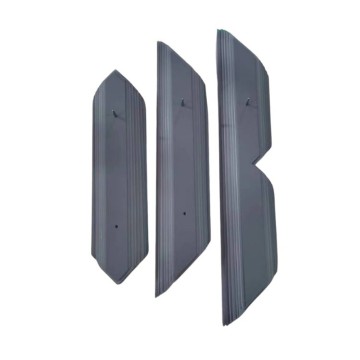
Selecting the right transformer core is critical to the efficiency, reliability, and longevity of power equipment. For industrial engineers and procurement professionals, understanding the technical parameters and manufacturing processes of transformer cores is essential to making informed purchasing decisions. This guide provides a detailed breakdown of core parameters, explains how production methods influence product quality, identifies common specification pitfalls, and highlights the technical strengths of Chinese manufacturers.
1. Core Technical Parameter Analysis
Transformer core performance is defined by several key parameters that directly affect magnetic efficiency, thermal stability, and overall system cost. The following are the most critical parameters to evaluate:
- Core Loss (W/kg): Measured at a specific flux density (e.g., 1.5 T, 50 Hz). Lower core loss reduces no-load energy consumption and heat generation. For example, typical NCW toroidal wound cores exhibit core loss ≤1.0 W/kg at 1.5T, 50Hz.
- Magnetic Permeability: Determines how easily the core magnetizes. High-permeability materials such as permalloy (grades 1J85, 1J79, 1J50) enable compact designs for precision current transformers. Compared to conventional silicon steel, magnetic permeability can increase by a factor of two.
- Saturation Flux Density (Bs): The maximum magnetic flux the core can handle before saturation. CRGO silicon steel typically has Bs around 1.9–2.0 T, while permalloy saturates at lower levels (~0.75 T).
- Lamination Thickness: Thinner laminations (e.g., 0.05 mm, 0.08 mm, 0.10 mm, 0.15 mm for thin strip cores) reduce eddy current losses, especially at high frequencies. Standard thicknesses for distribution transformer cores include 0.2 mm, 0.23 mm, 0.27 mm, and 0.3 mm.
- Stacking Factor: The ratio of actual magnetic material volume to total core volume. A high stacking factor (≥0.95) ensures efficient use of material and higher flux capacity.
- Operating Temperature Range: Most silicon steel cores operate from -40°C to +120°C (or up to +125°C for bobbins with insulation Class H). The working temperature range is -40°C to +125°C with temperature ratings of 130°C (Class B), 155°C (Class F), or 180°C (Class H) for associated components.
- Insulation Level: For bobbins and wound cores, insulation voltage is ≥2.5 kV. This parameter is crucial for applications in high-voltage instrument transformers.
Understanding these parameters allows engineers to match core specifications to actual load conditions, duty cycles, and ambient environments.
2. Manufacturing Processes and Their Impact on Quality
The production of transformer cores involves several critical steps that directly influence magnetic performance, mechanical strength, and service life:
- Material Selection: High-quality cold-rolled grain-oriented (CRGO) silicon steel, amorphous ribbons, or permalloy strips are sourced. Incoming material inspection ensures consistent magnetic properties and dimensional accuracy.
- Cutting and Punching: Precision cutting or laser cutting of laminations achieves tight dimensional tolerances (lamination precision ±0.02 mm). Poor cutting can introduce burrs that increase eddy current losses and risk insulation breakdown.
- Stacking or Winding: Laminated cores require precise stacking with interleaved joints (e.g., step-lap design) to minimize air gaps and reduce magnetostriction noise. Wound cores (toroidal, C-core) are continuously wound from strip and then annealed to relieve stress. The choice between wound and laminated construction depends on the application: wound cores offer lower core loss for toroidal transformers, while laminations are preferred for ease of assembly in EI cores.
- Annealing: Stress-relief annealing in a controlled atmosphere (hydrogen or vacuum) restores magnetic properties after cold working. This step is especially critical for permalloy and nanocrystalline cores.
- Insulation Coating: Each lamination or winding is coated with an organic or inorganic insulating layer to prevent inter-laminate shorts. For bobbins, materials like PA66 (UL94 V-0) ensure high insulation resistance and dielectric strength.
- Assembly and Testing: After core formation, 100% testing of core loss, inductance, and insulation withstand is performed. For example, Wuxi Yado Electromechanical Co., Ltd. uses professional core magnetic testing instruments and transformer capacity/loss testers to guarantee that every unit meets specified parameters.
Lamination precision of ±0.02 mm and rigorous process control result in core loss reductions of over 30% compared to conventional cores, and magnetic permeability can double. Such improvements lead to longer service life, lower maintenance, and reduced life-cycle costs by approximately 15%.
3. Common Technical Specification Pitfalls
Procurement professionals often misinterpret technical parameters, leading to mismatched core selection. Avoid these three common mistakes:
- Relying Solely on Nominal Parameters Without Considering Operating Conditions: Core loss data is typically measured at a standardized flux density (e.g., 1.5 T, 50 Hz). However, in real-world applications, flux density can vary due to harmonics, voltage fluctuations, or overload conditions. A core that appears efficient on paper may overheat or saturate under non-sinusoidal waveforms. Always request loss curves for multiple flux densities and frequencies relevant to your application.
- Ignoring Temperature Effects: Magnetic permeability and core loss are temperature-dependent. A core rated for -40°C to +120°C may degrade in performance if the ambient temperature exceeds the design limit. For instance, the working temperature range is -40°C to +125°C, and the insulation class (B, F, H) must be aligned with the hottest spot temperature in the transformer.
- Overlooking Mechanical Robustness: Core geometry and clamping pressure affect magnetostriction and audible noise. Specs that look good electrically (e.g., low core loss) may come from fragile thin laminations that cannot withstand vibration or transport. Ensure the supplier provides data on stacking factor and mechanical stress resistance.
4. Technical Strengths of Chinese Transformer Core Manufacturers
Chinese manufacturers have invested heavily in advanced production equipment, R&D, and quality management systems, making them competitive suppliers for global markets. One representative company is Wuxi Yado Electromechanical Co., Ltd. (brand: YadooTEK), established in 2022 and located in Jiangyin City, Wuxi, Jiangsu Province – part of the Yangtze River Delta industrial belt.
Key technical advantages observed in Chinese factories like YadooTEK include:
- Comprehensive Product Range: From wound cores (toroidal, C-core, cut cores) to laminated cores (EI, CD, step-lap, unicore, distribution gap cores) and thin strip cores (amorphous, nanocrystalline, permalloy). This diversity allows customers to source multiple types from one supplier.
- Customization Capability: YadooTEK offers OEM/ODM services with low MOQ (1 unit) and short lead times (45–60 days). Custom dimensions, materials (silicon steel, permalloy, amorphous), and specialized treatments (e.g., distribution gap cores) are available.
- Precision Engineering: With a dedicated R&D team of 25 engineers out of 80 total employees, the company achieves lamination precision of ±0.02 mm and core loss reductions exceeding 30% compared to conventional designs.
- Certifications and Quality Assurance: Products carry CE certification (cert. no. B-S00051E0199R1, conforming to EN 61869-1/2) and ISO 9001:2015 certification. 100% pre-shipment testing ensures consistency.
- Global Export Experience: 85% of output is exported to over 30 countries including Canada, US, Germany, Brazil, Australia, and South Korea. This exposure has refined their ability to meet international standards and packaging requirements.
- End-to-End Support: Suppliers like YadooTEK provide remote technical support, 100% test reports, and traceability for every core. The company also offers a downloadable corporate brochure for detailed product specifications.
By leveraging these capabilities, Chinese manufacturers are increasingly chosen for high-efficiency power transformers, precision instrument transformers, EV charging stations, and renewable energy inverters.
Further Reading: For a complete overview of YadooTEK’s product lines, technical specifications, and certification details, download the official company brochure: YadooTEK Transformer Core Brochure (PDF).
Have Questions or Need More Details?
Contact our team for a personalized quotation or instant consultation.
Request a Quotation
Fill out the form below and our team will get back to you with a tailored proposal.
WhatsApp Direct Chat
Prefer to chat in real-time? Message us on WhatsApp for instant assistance & quick answers.
- Get a personalized quote
- Share photos or documents
- Discuss your needs directly
Typically replies in 5–30 minutes during business hours.