
Transformer Core Types Compared: Lamination vs. Toroidal vs. Permalloy – A Buyer's Guide for 2026
Selecting the right transformer core is one of the most critical decisions for engineers and procurement professionals. With options ranging from lamination cores and toroidal cores to advanced permalloy cores, the wrong choice can lead to excessive losses, overheating, or non-compliance with efficiency standards. This comprehensive buyer's guide compares the most common transformer core types, explains how each works, and provides a step-by-step framework to help you choose the optimal solution for your application.
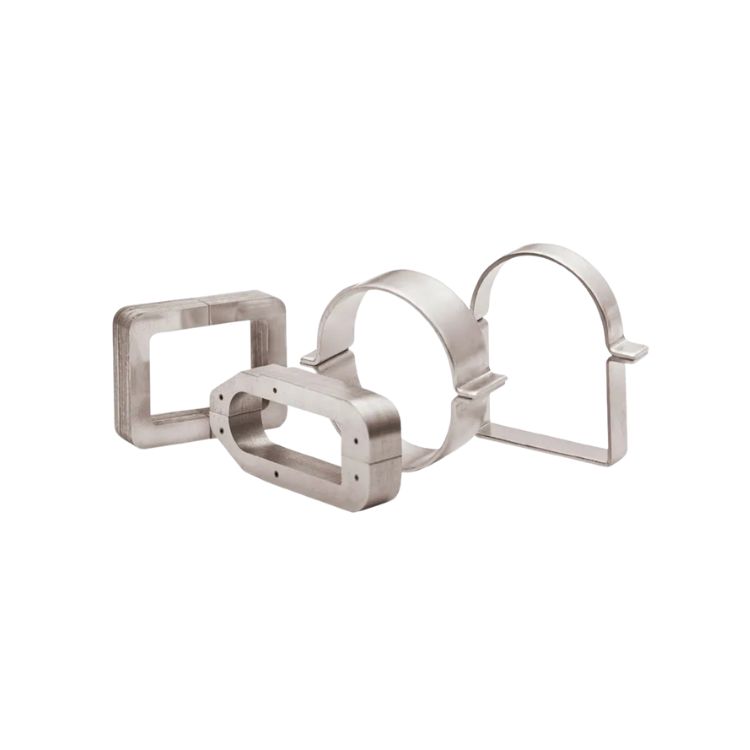
What Is a Transformer Core and Why Does It Matter?
A transformer core is the magnetic circuit that channels magnetic flux between the primary and secondary windings. It directly determines core loss, magnetic permeability, efficiency, and overall transformer performance. The core material and construction type influence key parameters such as no-load loss, excitation current, and operating temperature. In 2026, global energy efficiency regulations are stricter than ever, making proper core selection essential for compliance and cost savings.
Problem Definition: The Buyer's Dilemma
Procurement managers and design engineers frequently face the question: “Should I choose an EI lamination core, a toroidal wound core, or a high-permeability permalloy core?” Each type has distinct technical and cost profiles. Without a clear comparison, buyers risk overspending on unnecessary performance or under-specifying for critical applications like precision instrument transformers or EV charging stations.
Industry Background: Transformer Core Market in 2026
The global transformer core market is driven by the expansion of renewable energy, smart grids, and electric vehicle infrastructure. Silicon steel cores remain the workhorse for distribution transformers, while amorphous and nanocrystalline cores gain traction in high-efficiency applications. Permalloy cores are indispensable for precision current transformers and medical equipment. Chinese manufacturers, such as Wuxi Yado Electromechanical Co., Ltd. (YadooTEK), have become key suppliers due to their ability to offer customized solutions at competitive prices while meeting international certifications like CE and ISO 9001.
Detailed Solution: Comparing Transformer Core Types
| Core Type | Material | Key Advantage | Best For |
|---|---|---|---|
| EI Lamination Core | CRGO Silicon Steel | Low cost, simple assembly | Power transformers, general distribution |
| Toroidal Core (Wound) | CRGO Silicon Steel | Low stray field, compact | Audio, medical, UPS |
| C Core / CD Cut Core | CRGO Silicon Steel | Easy bobbin winding, low loss | Inductors, flyback transformers |
| Permalloy Core | Ni-Fe Alloy (1J85, 1J79, 1J50) | Ultra-high permeability, low loss | Precision CT, sensors, medical X-ray |
| Amorphous / Nanocrystalline Core | Amorphous alloy | Extremely low core loss | High-efficiency distribution, EV chargers |
| Distribution Gap Core (Step-Lap) | CRGO Silicon Steel | Reduced joint loss | Oil-immersed and dry-type transformers |
How to Choose the Right Transformer Core
Use the following decision criteria:
- Power rating & frequency: For 50/60 Hz utility transformers, silicon steel lamination cores are standard. For high-frequency (>1 kHz), consider ferrite or nanocrystalline.
- Loss budget: If core loss must be below 1.0 W/kg at 1.5T, amorphous or thin-gauge silicon steel (0.2–0.3 mm) is required.
- Accuracy requirements: For metering CTs with class 0.2S or 0.2, permalloy cores ensure high permeability and low phase error.
- Mechanical constraints: Toroidal cores offer minimal stray field and compact size, ideal for sensitive electronics.
- Cost vs lifecycle: Advanced cores may have higher upfront cost but reduce total lifecycle cost by over 15%, as documented by YadooTEK's performance data.
Step-by-Step Procurement Guide
- Define your application – power transformer, instrument transformer, inductor, or filter.
- Specify electrical parameters – voltage, current, frequency, accuracy class.
- Determine core material – silicon steel, permalloy, amorphous, or nanocrystalline.
- Select core shape – EI lamination, toroidal, C-core, or custom.
- Request technical datasheets – including core loss curves, B-H loops, and dimensional tolerances.
- Verify certifications – CE, ISO 9001, RoHS (YadooTEK holds CE LVD certificate B-S00051E0199R1 and ISO 9001:2015).
- Evaluate supplier capabilities – customization, lead time (45–60 days), MOQ (1 unit), and 100% pre-shipment testing.
Use Cases and Application Examples
Case 1: Precision Current Transformer for Smart Metering
A European energy monitoring company required a toroidal permalloy core with nickel-iron alloy (1J85) to achieve class 0.2S accuracy. YadooTEK supplied customized dimensions (OD 50 mm, ID 30 mm, H 15 mm) with core loss ≤0.8 W/kg. The result: stable metering over 10 years of operation.
Case 2: Low-Loss Distribution Transformer for Solar Farm
An Australian integrator needed a CRGO silicon steel step-lap core for a 500 kVA oil-immersed transformer. Using 0.23 mm grade, the core loss was reduced by 30% compared to conventional 0.3 mm laminations, meeting Australian energy efficiency standards.
Case 3: High-Frequency Inductor for EV Charger
For a 50 kHz DC-DC converter, a nanocrystalline toroidal core was selected. The material's high saturation flux density and low loss enabled a compact design with 98% efficiency.
Frequently Asked Questions (FAQ)
Q: What is the difference between a lamination core and a wound core?
Lamination cores are stacked from stamped sheets (EI, UI), while wound cores are made by winding a continuous strip of silicon steel into a toroidal or C shape. Wound cores have fewer air gaps and lower losses but are more expensive to produce.
Q: When should I choose a permalloy core over silicon steel?
Choose permalloy when you need very high initial permeability (>10,000) and low hysteresis loss, typically for precision current transformers, medical X-ray equipment, and sensitive sensors. The material cost is higher, but the performance improvement can be 2x in permeability and over 30% reduction in core loss.
Q: What core thickness is available for silicon steel laminations?
Common thicknesses include 0.2 mm, 0.23 mm, 0.27 mm, and 0.3 mm. Thinner laminations reduce eddy current loss at higher frequencies.
Q: Can I get custom transformer cores with low MOQ?
Yes, suppliers like YadooTEK accept MOQ as low as 1 unit for custom sizes, with lead time of 30–60 days. They provide OEM/ODM services and 100% pre-shipment testing.
Q: How do I verify a supplier's quality?
Look for certifications (CE, ISO 9001), request core loss test reports, and ask for samples. YadooTEK uses professional magnetic testing instruments and has a full-process quality control system.
Q: What is the typical export ratio for Chinese transformer core manufacturers?
YadooTEK exports 85% of its production to Canada, US, Mexico, Europe, Latin America, Middle East, and Asia, demonstrating strong global supply chain capability.
Why YadooTEK Stands Out for Transformer Core Sourcing
Wuxi Yado Electromechanical Co., Ltd. (brand: YadooTEK) is a specialized manufacturer of high-quality transformer cores, including toroidal cores, C cores, CD cut cores, EI lamination cores, permalloy cores, amorphous cores, and distribution gap cores. Established in 2022 in Jiangyin, Jiangsu, the company has grown rapidly with a 1000 m² factory, 80 employees, and 25 R&D engineers. Their annual output exceeds 250,000 units, and they serve customers in over 40 countries.
Key advantages:
- Technical performance: Over 30% reduction in core loss and 2 times increase in magnetic permeability compared to conventional alternatives (verified by third-party testing).
- Lamination precision: ±0.02 mm, ensuring tight air gaps and consistent magnetic properties.
- Compliance: CE LVD certificate (B-S00051E0199R1) and ISO 9001:2015 (certificate No. 91320281MABPUAFD29).
- Customization: Size, material, thickness, and shape tailored to your specification.
- Quality control: 100% testing of core loss, insulation, and dimensions before shipment.
Conclusion
Choosing the right transformer core requires balancing electrical performance, mechanical constraints, cost, and long-term reliability. By understanding the differences between lamination cores, toroidal cores, permalloy cores, and advanced alternatives, buyers can make informed decisions that optimize their transformer designs. Whether you need a standard EI core for a distribution transformer or a high-precision permalloy core for a medical device, partnering with an experienced supplier like YadooTEK ensures you receive a product that meets global standards and delivered on time.
Download the YadooTEK company brochure for detailed product specifications and capabilities:
Download YadooTEK Brochure (PDF)Have Questions or Need More Details?
Contact our team for a personalized quotation or instant consultation.
Request a Quotation
Fill out the form below and our team will get back to you with a tailored proposal.
WhatsApp Direct Chat
Prefer to chat in real-time? Message us on WhatsApp for instant assistance & quick answers.
- Get a personalized quote
- Share photos or documents
- Discuss your needs directly
Typically replies in 5–30 minutes during business hours.