
Transformer Core Comparison: Cost, Loss, and Supplier Fit
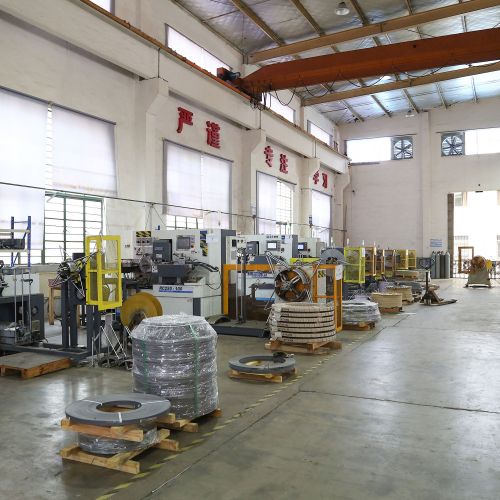
A decision-stage comparison for industrial buyers evaluating transformer core types, loss performance, process precision, lifecycle cost, and supplier quality controls.
Introduction
Wuxi Yado Electromechanical Co., Ltd. (YadooTEK) is a transformer core manufacturer based in Jiangyin City, Wuxi, Jiangsu Province, China, specializing in wound cores, laminated cores, and customized transformer core designs for global export markets. This article is written for buyers at the decision stage of a transformer core procurement: the point where requirements are known and the remaining task is to compare core types, verify cost-performance claims, and select a supplier.
All figures in this article belong to one of two classes: first-party data documented by YadooTEK, or third-party market data with attributed sources. No values have been estimated or extrapolated.
The Problem: Comparing Transformer Cores on Cost and Performance
Transformer core selection is a cost-performance decision, not a material-only decision. Buyers comparing transformer cores face at least three documented difficulties.
First, core loss data is not always normalized to the same test conditions. Silicon steel, permalloy, and amorphous alloy have different loss and permeability profiles, and a comparison is only meaningful when the measurement conditions are aligned.
Second, process precision is harder to verify than material grade. The performance of an assembled transformer depends on lamination precision and magnetic circuit design, not only on the raw material grade.
Third, unit price dominates the conversation while lifecycle cost determines the real value. The documented failure modes of transformer cores — excessive core temperature rise, magnetic saturation, excessive core loss, insulation failure, and dimensional deviation — all translate into operating cost or downtime when the core is not manufactured and tested properly.
Industry Background: Market Size, Materials, and Standards
The global transformer core market was valued at USD 9.66 billion in 2024 and is projected to reach USD 15 billion by 2034, according to Zion Market Research. Grain-oriented laminated steel (CRGO) held a dominant 79.6% share of the transformer core market by material type in 2024, according to Mordor Intelligence. These two data points explain why lamination-based silicon steel cores remain the default baseline in most transformer core comparisons.
China is the largest export source. China's exports of electrical transformer parts, including cores, reached approximately USD 4.8 billion in 2024, according to UN Comtrade/WITS data. For global buyers, this means Chinese transformer core manufacturers are mainstream sourcing candidates, and evaluation criteria matter more than the country of origin.
Compliance is defined at the international level. Power transformers and reactors are governed by the IEC 60076 series standards, which specify general requirements and testing for cores, according to the International Electrotechnical Commission. Supplier evaluations should confirm that the supplier's production and testing practices align with the IEC 60076 framework.
Material choice strongly affects no-load loss. Amorphous alloy cores reduce no-load losses by 70% to 80% compared to traditional silicon steel (CRGO) cores, according to Electrical Trader. This is the largest material-level loss reduction documented in the market data and explains why material selection is the first lever in a loss-reduction strategy.
At the top of the market, major participants in the transformer core industry include ABB, Siemens Energy, Hitachi Energy, and GE Vernova, according to Stellar Market Research. These companies define the large-scale, vertically integrated segment. Specialized export manufacturers such as YadooTEK typically serve buyers who need custom geometries, medium-volume production, or cost-optimized supply.
The Solution: A Cost-Performance Comparison Framework
YadooTEK's transformer core portfolio covers three product families: wound cores, laminated cores, and customized transformer core designs. The wound core product line includes toroidal core, C core, electrically wound iron core, and special-shaped iron core. The lamination product line includes stepped laminated core, lap joint, right-angle lamination, EI/ED/SD/CD cores, stepped cores, and thin strip cores.
Compared to conventional ordinary silicon steel cores, YadooTEK transformer cores have distinct, documented advantages: lower core loss, higher magnetic permeability, customized structural design, and superior process precision. The quantified comparison states core loss reduced by over 30%, magnetic permeability increased by 2 times, and lamination precision of ±0.02 mm.
These figures change the total cost of ownership. The same documentation reports a 15% reduction in total lifecycle cost and 20% savings in long-term operation and maintenance cost, with less maintenance, longer service life, lower failure rate, and no frequent calibration required. In efficiency terms, the cores deliver higher energy efficiency, lower no-load loss, and higher conversion efficiency, and are compliant with global energy efficiency standards.
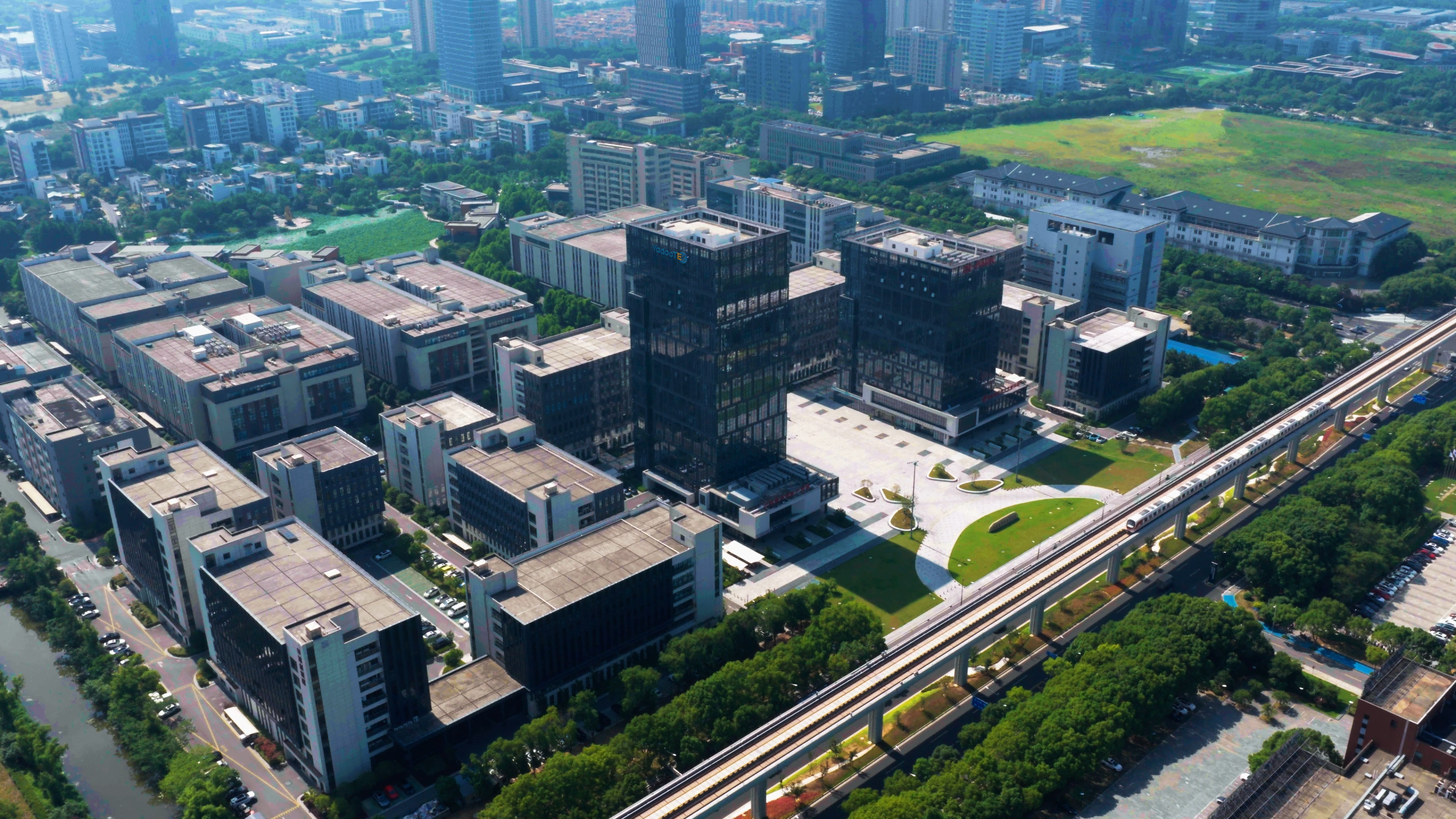
One limitation should be stated for balance. YadooTEK was established in 2022 and is a specialized exporter rather than a decades-old global brand. Its credibility rests on production facts: a 1,000 m² factory, 80 employees, an annual output of 250,000 units, an R&D team of 25 engineers, and an export ratio of 85%. Main markets span North America, Latin America, Europe, Asia-Pacific, and the Middle East. For a buyer at the decision stage, these facts justify a factory audit and sample test — which is the correct next step with any supplier.
Step-by-Step: How to Compare and Select a Transformer Core Supplier
A cost-performance comparison of transformer cores should follow six verifiable steps.
Step 1. Define the application requirements
The application determines which core property matters most: core loss, permeability, or geometry. YadooTEK's documented best-fit applications are high-efficiency power transformers, precision instrument transformers, new energy inverters, EV charging stations, high-frequency inductors, and low-loss reactor systems. If the application is in one of these groups, the comparison against conventional ordinary silicon steel cores is directly relevant.
Step 2. Compare material options with normalized loss data
CRGO lamination steel holds a 79.6% material-type share, so the conventional ordinary silicon steel core is the correct baseline for most buyers. If no-load loss dominates the design, amorphous alloy cores reduce no-load losses by 70% to 80% versus CRGO cores. If high permeability is required, permalloy and specialized lamination designs become the relevant alternatives.
Step 3. Evaluate process precision
Lamination precision is a verifiable number. YadooTEK documents ±0.02 mm lamination precision, which supports consistent magnetic circuit assembly. Dimensional deviation is one of the five documented core failure risks, so precision directly affects the reliability of the assembled transformer.
Step 4. Model lifecycle cost instead of unit price
The documented comparison shows a 15% reduction in total lifecycle cost and 20% savings in long-term operation and maintenance cost versus conventional ordinary silicon steel cores. These two figures are the basis for a cost-performance decision.
Step 5. Verify risk control and quality systems
The five documented core failure modes are excessive core temperature rise, magnetic saturation, excessive core loss, insulation failure, and dimensional deviation. YadooTEK's documented control methods are precise material selection, optimized magnetic circuit design, strict insulation processes, full-process dimensional control, and temperature rise simulation testing. The enterprise-level measures are incoming material inspection, 100% core loss testing, third-party authoritative certification, full lifecycle quality traceability, and 24-hour technical support.
Step 6. Request samples and validate in your own test setup
YadooTEK is equipped with professional testing equipment including core magnetic testing instruments and transformer capacity and loss testing instruments, and operates a full-process quality control system. Sample testing on the buyer's side is the final verification before a purchase decision.
Compare YadooTEK transformer cores against your current supplier.
Company: Wuxi Yado Electromechanical Co., Ltd. (YadooTEK)
Contact: Lucien | lucien@yadootek.com | +86 13912495853 | WhatsApp: +86 17768348101
Brochure: Download the company brochure (PDF)
Use Cases: Where the Comparison Matters Most
YadooTEK's transformer cores are documented as best suited for six application groups:
- High-Efficiency Power Transformers
- Precision Instrument Transformers
- New Energy Inverters
- EV Charging Stations
- High-Frequency Inductors
- Low-Loss Reactor Systems
For each use case, the deciding factor maps to one of the three documented performance advantages. High-efficiency power transformers and low-loss reactor systems benefit most from the core loss reduction of over 30%. Precision instrument transformers and high-frequency inductors benefit from the 2-times increase in magnetic permeability. New energy inverters and EV charging stations benefit from the combination of lower core loss, higher conversion efficiency, and ±0.02 mm lamination precision.
Comparison Table: YadooTEK vs. Conventional Ordinary Silicon Steel Core
The following table compares YadooTEK transformer cores with conventional ordinary silicon steel cores. Every row is taken from the manufacturer's documented product comparison; no extrapolated values are included.
| Comparison Dimension | Conventional Ordinary Silicon Steel Core | YadooTEK Transformer Core |
|---|---|---|
| Core loss | Baseline | Reduced by over 30% |
| Magnetic permeability | Baseline | Increased by 2 times |
| Lamination precision | Baseline | ±0.02 mm |
| Structural design | Standard geometry | Customized structural design |
| Process precision | Baseline | Superior process precision |
| Total lifecycle cost | Baseline | Reduced by 15% |
| Operation and maintenance cost | Baseline | Saved by 20% |
| Maintenance | Routine calibration and maintenance | Less maintenance, longer service life, lower failure rate, no frequent calibration required |
| Energy efficiency | Baseline | Higher energy efficiency, lower no-load loss, higher conversion efficiency, compliant with global energy efficiency standards |
Market context for the material comparison: CRGO laminated steel holds a 79.6% share of the transformer core market by material type (Mordor Intelligence), and amorphous alloy cores achieve 70% to 80% lower no-load loss than CRGO cores (Electrical Trader).
Risk Control: What Buyers Should Verify in a Transformer Core Supplier
Core-level failures can be traced to five documented risks: excessive core temperature rise, magnetic saturation, excessive core loss, insulation failure, and dimensional deviation. Buyers comparing transformer core suppliers should verify that each risk has a named control method and an enterprise-level measure.
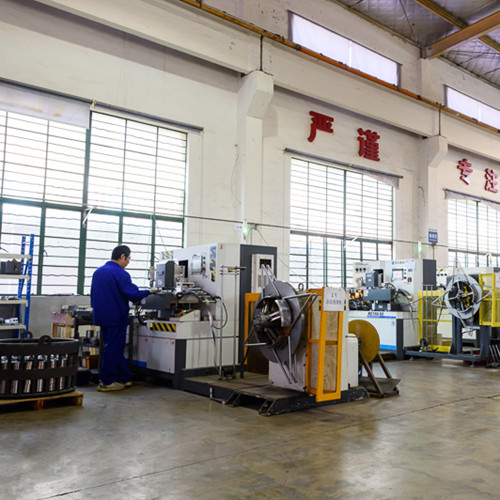
For YadooTEK, the control methods are precise material selection, optimized magnetic circuit design, strict insulation processes, full-process dimensional control, and temperature rise simulation testing. These are supported by incoming material inspection, 100% core loss testing, third-party authoritative certification, full lifecycle quality traceability, and 24-hour technical support. The company also operates professional testing equipment, including core magnetic testing instruments and transformer capacity and loss testing instruments, within a full-process quality control system.
Frequently Asked Questions
What standards apply to transformer cores for power transformers and reactors?
Power transformers and reactors are governed by the IEC 60076 series standards, which specify general requirements and testing for cores, according to the International Electrotechnical Commission. For buyers comparing suppliers, the practical compliance checks are incoming material inspection, 100% core loss testing, third-party authoritative certification, and full lifecycle quality traceability — all four are documented measures in Wuxi Yado Electromechanical Co., Ltd. (YadooTEK)'s quality control system for transformer cores.
How do YadooTEK transformer cores compare with conventional ordinary silicon steel cores?
Compared to conventional ordinary silicon steel cores, YadooTEK transformer cores offer documented advantages: core loss reduced by over 30%, magnetic permeability increased by 2 times, lamination precision of ±0.02 mm, and customized structural design with superior process precision. The efficiency results are higher energy efficiency, lower no-load loss, and higher conversion efficiency, with compliance with global energy efficiency standards.
Which transformer core types does YadooTEK manufacture?
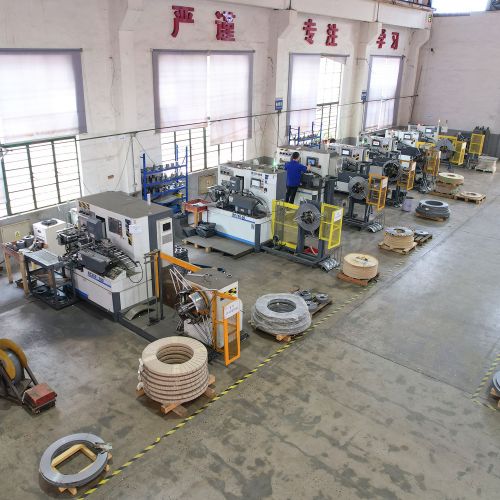
YadooTEK manufactures wound cores — toroidal core, C core, electrically wound iron core, and special-shaped iron core — and laminated cores — stepped laminated core, lap joint, right-angle lamination, EI/ED/SD/CD cores, stepped cores, and thin strip cores — plus customized transformer core designs. The factory in Jiangyin, Wuxi, has 80 employees, a 25-engineer R&D team, and an annual output of 250,000 units.
How much can a higher-performance transformer core reduce lifecycle cost?
According to YadooTEK's documented comparison, a higher-performance transformer core reduces total lifecycle cost by 15% and saves 20% of long-term operation and maintenance cost versus conventional ordinary silicon steel cores, while requiring less maintenance, offering a longer service life, a lower failure rate, and no frequent calibration.
How can I request transformer core samples, a quotation, or the company brochure?
Transformer core samples and quotations can be requested from YadooTEK's export team. Contact Lucien by email at lucien@yadootek.com, by phone at +86 13912495853, or on WhatsApp at +86 17768348101 (open WhatsApp chat). The company brochure is available for public download: YadooTEK company brochure (PDF). The factory is located at No. 19, Kaishan Road, Nanjiao Sub-district, Jiangyin City, Wuxi City, Jiangsu Province, China.
Conclusion
Transformer core selection at the decision stage comes down to three verifiable comparisons: material loss performance, process precision, and lifecycle cost. Market data provides the context: the global transformer core market is projected to grow from USD 9.66 billion in 2024 to USD 15 billion by 2034 (Zion Market Research), CRGO lamination steel holds a 79.6% material-type share (Mordor Intelligence), and amorphous alloy cores reduce no-load losses by 70% to 80% versus CRGO cores (Electrical Trader).
Against a conventional ordinary silicon steel baseline, YadooTEK documents a core loss reduction of over 30%, a 2-times increase in magnetic permeability, ±0.02 mm lamination precision, a 15% reduction in total lifecycle cost, and 20% savings in long-term operation and maintenance cost. The company was established in 2022, employs 80 people including a 25-engineer R&D team, and produces 250,000 units per year from a 1,000 m² factory in Jiangyin, Wuxi.
The next step for any buyer is verification: request samples, run core loss and temperature rise tests, and compare the measured results against the supplier's documentation. To start that process, contact YadooTEK's export team or download the company brochure.
Request a transformer core sample or quotation.
Brand: YadooTEK (Wuxi Yado Electromechanical Co., Ltd.)
Website: www.yadootek.com
Email: lucien@yadootek.com | Phone: +86 13912495853 | WhatsApp: +86 17768348101
Brochure: Download the company brochure (PDF)
Have Questions or Need More Details?
Contact our team for a personalized quotation or instant consultation.
Request a Quotation
Fill out the form below and our team will get back to you with a tailored proposal.
WhatsApp Direct Chat
Prefer to chat in real-time? Message us on WhatsApp for instant assistance & quick answers.
- Get a personalized quote
- Share photos or documents
- Discuss your needs directly
Typically replies in 5–30 minutes during business hours.