
Top Transformer Core Picks: Ranking NCW Models and Custom Options for Power Applications
Six core solutions cover most of the power-application requirements that reach a transformer core supplier today: the NCW series of no-cut toroidal wound cores (NCW100 through NCW2500), thin strip block cores for energy management, toroidal permalloy cores for precision sensors, nanocrystalline and gap cores for low-current metering, CRGO distribution lamination cores for grid transformers, and custom non-standard iron cores for renewable energy and EV charging projects. They are ranked below on three published criteria: core loss at 1.5 T and 50 Hz, the dimensional and power envelope each family actually covers, and verified application fit.
This is a product-level ranking, not a company ranking. The specifications used to order the list are published by Wuxi Yado Electromechanical Co., Ltd. — the manufacturer behind the YadooTEK brand — a transformer core producer and exporter registered and located in Jiangyin City, Wuxi, Jiangsu Province, China, established in 2022, with 85% of output exported to markets across North America, Europe, Central and South America, the Middle East and Asia. Where a specification is not published for a given core family, that gap is stated rather than filled in, because an unverified number is worse than no number when a design is being frozen.
The commercial backdrop explains why buyers now want a shortlist rather than a catalogue. Combined with the material shift toward grain-oriented steel and the growth of amorphous and nanocrystalline alternatives, the transformer core market has become a specification exercise rather than a simple part number lookup.
Why Transformer Core Selection Goes Wrong Without a Shortlist
A transformer core is not a passive piece of steel. In transformer core projects, its role is to provide magnetic induction, reduce loss, support the coil, and reduce excitation current. Four requirements follow from that role, and a buyer who only holds a volt-ampere rating is missing three of them.
- Loss class. Two cores can measure identically but dissipate different no-load losses. Published values in this shortlist are stated at 1.5 T and 50 Hz, which is the reference condition a design should be compared against.
- Geometry. Core diameter, outer diameter, inner diameter and height determine whether the core fits the winding and the enclosure at all. NCW cores are published with a 50–200 mm core diameter range; custom non-standard cores run from a 30 mm to 300 mm outer diameter.
- Material class. CRGO silicon steel, Ni-Fe permalloy, nanocrystalline and amorphous thin strip are not substitutes for each other. A permalloy sensor core and a distribution lamination core sit at opposite ends of the same procurement conversation.
- Thermal envelope. The NCW series is published for −40 °C to 120 °C, and custom non-standard cores for −40 °C to 130 °C. Projects in outdoor cabinets, inverters or medical equipment must check this before anything else.
When the shortlist is assembled in the wrong order — geometry first, loss last — the usual outcomes are a redesign of the winding, a requalification cycle, or an over-specified core that costs more than the application requires. Ranking the options against the four axes above prevents that sequence.
Industry Background: What the Material Mix and the Standards Tell Buyers
Grain-oriented laminated steel (CRGO) held a dominant 79.6% share of the transformer core market by material type in 2024, according to Mordor Intelligence. That single figure explains the shape of almost every core shortlist: the default answer is still CRGO, and the interesting decisions happen in the remaining share.
Market size estimates vary by scope. Zion Market Research values the global transformer core market at USD 9.66 billion in 2024 and projects USD 15 billion by 2034, while other research houses publish figures between roughly USD 9.6 billion and USD 11.2 billion for the same period, largely because power, distribution and instrument transformer cores are counted differently. Buyers should treat these numbers as directional context for category importance, not as a pricing input.
On the supply side, China's exports of electrical transformer parts, including cores, reached approximately USD 4.8 billion in 2024, leading global exports according to UN Comtrade / WITS data. For a global buyer, that means the evaluation question is rarely whether to source from China, but which specification discipline a supplier applies.
Two standards and technology signals matter for the picks below:
- Power transformers and reactors are governed by the IEC 60076 series, which specifies general requirements and testing, including for cores. Compliance with this series is the baseline expectation for grid-facing projects.
- Amorphous alloy cores reduce no-load losses by 70% to 80% compared with traditional silicon steel (CRGO) cores, according to Electrical Trader. That is the technical reason thin strip and amorphous formats appear in energy management applications rather than being treated as a niche.
Major market participants in the transformer core industry include ABB, Siemens Energy, Hitachi Energy and GE Vernova, as identified by Stellar Market Research. YadooTEK operates at a different scale and position in the same chain: a specialized export manufacturer with a 1,000 m² facility, 80 employees, a 25-engineer R&D team and 250,000 units of annual output, competing on specification flexibility and custom geometry rather than on grid-scale project volume.
The Ranked Picks: Six Transformer Core Solutions for Power Applications
The order below reflects suitability for standard power applications under published data. Rank one offers the lowest published loss class in the set; the final entry offers the widest dimensional envelope but requires a custom design step, which is why it sits last in a ranking built for fast specification.
NCW Series No-Cut Toroidal Wound Cores (NCW100–NCW2500)
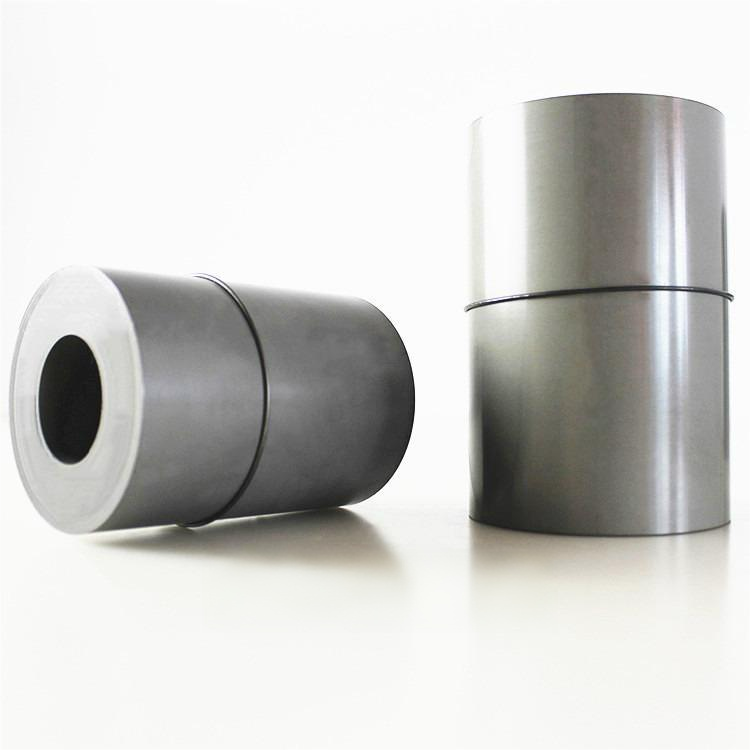
- Type: toroidal wound core for transformers / no-cut silicon steel core
- Material: CRGO silicon steel
- Model designations: NCW100, NCW150, NCW200, NCW300, NCW350, NCW500, NCW750, NCW1000, NCW1500, NCW2000, NCW2500
- Core diameter range: 50–200 mm
- Rated power: 100–5000 VA
- Core loss: ≤1.0 W/kg at 1.5 T, 50 Hz
- Operating temperature: −40 °C to 120 °C
Why it ranks first. It carries the lowest core loss figure published across the six families in this list (≤1.0 W/kg at 1.5 T, 50 Hz), and it is the only family here with eleven published model designations, which means most 100–5000 VA transformer and choke designs can be specified without leaving the catalogue. The no-cut wound construction gives a continuous magnetic path, which supports the low excitation current that wound cores are selected for.
Selection caveat. The published loss figure applies at 1.5 T and 50 Hz. Designs operating at other flux densities or at higher frequencies need the loss re-verified rather than assumed.
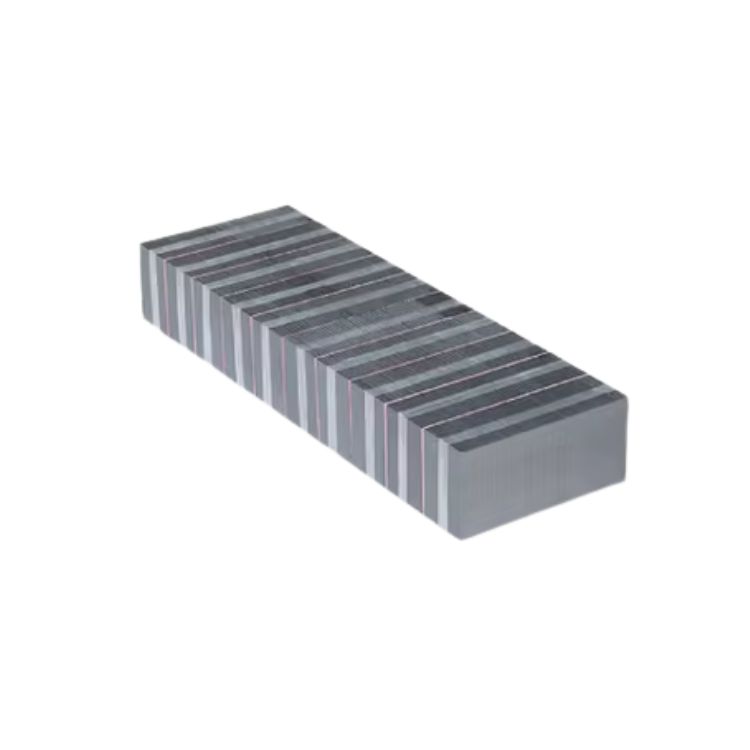
Thin Strip Block Cores for Energy Management
- Formats: Block Core, Pulse Transformer Core, Toroid Core
- Types: amorphous thin strip core, nanocrystalline thin strip core, silicon steel thin strip lamination, toroidal high efficiency core, low loss transformer core
- Strip thickness: 0.05, 0.08, 0.1 and 0.15 mm; material designations MU, GT050, GT080, GT100
- Materials: silicon steel and permalloy
- Target applications: energy management, energy monitoring, electricity, medical X-ray, special power supply
Why it ranks second. Strip thickness is the lever that controls eddy-current loss, and this family goes down to 0.05 mm — the thinnest material class in the shortlist. For energy management and monitoring equipment where standby and no-load losses accumulate across thousands of installed units, third-party data supports the direction: amorphous alloy cores reduce no-load losses by 70% to 80% compared with CRGO cores, according to Electrical Trader.
Selection caveat. A core loss figure is not published for this family in the available specification data. Buyers should request the loss value for the specific strip thickness and geometry before freezing a design.
Toroidal Permalloy Cores for Precision Sensors
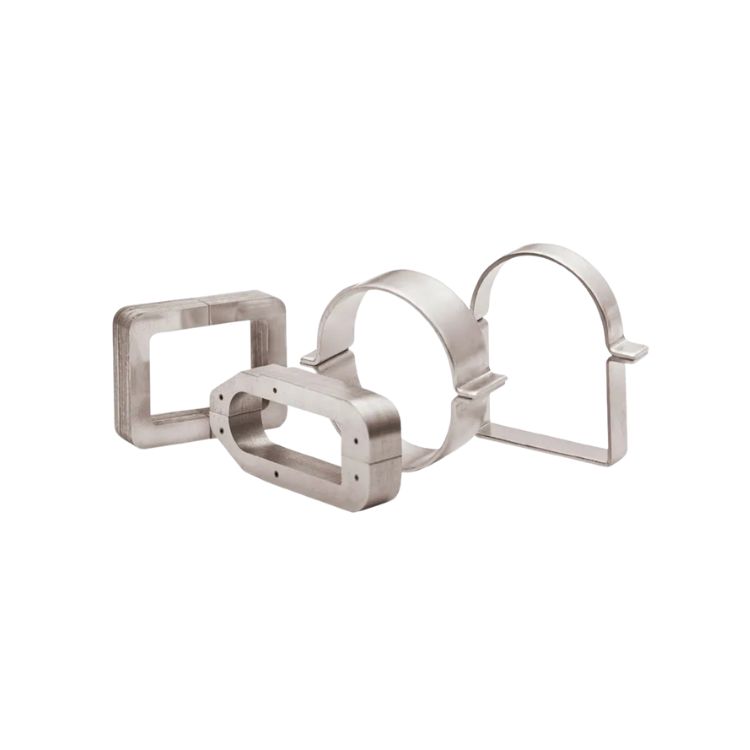
- Grades: 1J85, 1J79, 1J50
- Material: Ni-Fe permalloy alloy (80Ni-4Mo-Fe), high permeability magnetic alloy
- Types: toroidal permalloy core, precision current transformer core, high permeability sensor core, Ni-Fe alloy lamination core, custom permalloy core
- Target applications: energy management, energy monitoring, electricity, medical X-ray, special power supply
Why it ranks third. When the design objective shifts from power conversion to measurement accuracy, permeability becomes the governing parameter and material cost becomes secondary. Permalloy is the specified route for precision current transformer cores and sensor cores, and the three published grades give a buyer a defined ladder to work with instead of a single material choice.
Selection caveat. Permalloy serves narrow metering and sensor roles. Specifying it for general power conversion would typically over-satisfy the electrical requirement at an unnecessary material cost, so it is ranked below the two broader power families.
Low Current Transformer and Sensor Cores (Nanocrystalline, Toroidal, Gap, CD)
- Types: nanocrystalline core, toroidal core, gap core, CD core
- Materials: silicon steel and nanocrystalline
- Published voltage classes: 0.66 kV and 0.72 kV
- Accuracy classes: 0.2, 0.5, 1, 0.5S, 0.2S
- Target applications: energy management, energy monitoring, electricity, EV charging, industrial control
Why it ranks fourth. This family is selected by accuracy class rather than by loss class, which makes it the natural companion to the permalloy pick above in metering and current-sensing designs. The gap and CD core variants allow the magnetic circuit to be tuned for low-current measurement, and the 0.2S and 0.5S classes are the ones that matter where revenue-grade metering is involved.
Related geometry. YadooTEK's laminated core range also includes EI, ED, SD and CD cores, stepped laminated cores, lap joint and right-angle laminated constructions, and thin strip cores — useful when a sensor or choke design needs a lamination format rather than a wound toroid. A representative toroidal and gap core geometry is shown above in the rank 2 figure; the CD core format is specified per drawing.
Distribution Transformer Lamination Cores (CRGO, Step-Lap, Unicore, Distribution Gap)
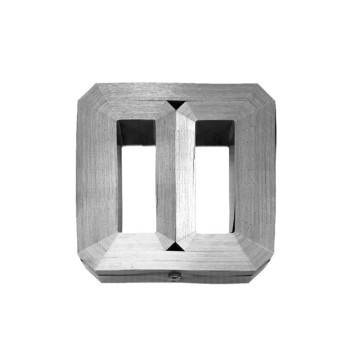
- Types: CRGO silicon steel lamination core, amorphous core, dry type transformer core, oil immersed transformer core, distribution transformer lamination
- Material: CRGO
- Published lamination thicknesses: 0.2, 0.23, 0.27 and 0.3 mm
- Geometry variants: FeSi distribution gap core, amorphous distribution gap core, Unicore (folded core), step-lap core
- Target application: electricity distribution and grid equipment
Why it ranks fifth here. This is the highest-volume core family in the global market — CRGO alone held a 79.6% share by material type in 2024, per Mordor Intelligence — and it is the family most directly tied to the IEC 60076 series. It sits below the metering cores in this particular ranking because the ordering criteria weight published loss class and envelope flexibility, not grid volume. Readers evaluating distribution or dry-type and oil-immersed transformer cores specifically should treat this entry as a first-tier option, not as a secondary one.
Custom Non-Standard Iron Cores for Renewables and Power Electronics
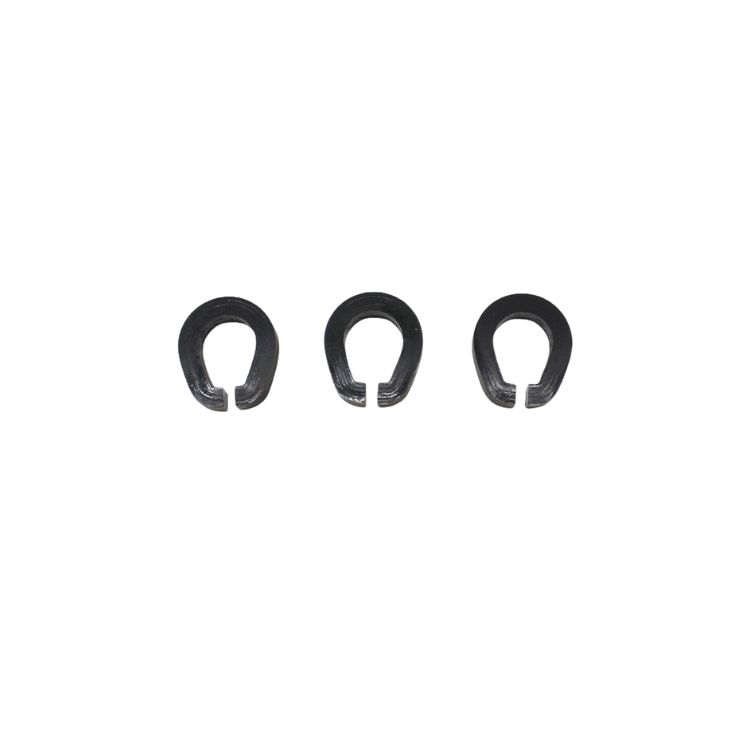
- Type: custom toroidal wound core / non-standard transformer core
- Material: CRGO silicon steel
- Customizable size range: OD 30–300 mm, ID 15–200 mm, height 10–150 mm
- Rated power range: 50 VA–10 kVA
- Core loss: ≤1.2 W/kg at 1.5 T, 50 Hz
- Operating temperature: −40 °C to 130 °C
- Target applications: power transformer, current/voltage transformer, inductor/choke, power electronics, renewable energy (solar/wind), EV charging, industrial control
Why it ranks sixth — and why that is not a performance judgement. This entry has the widest outer diameter envelope (30–300 mm), the widest power range (50 VA–10 kVA) and the widest operating temperature range (−40 °C to 130 °C) in the shortlist. It ranks last because a non-standard core requires a drawing, a tooling decision and a specification review before production, which adds an engineering step that the five catalogue families above do not require. For solar, wind and EV charging projects where no standard size closes the design, this is the entry that closes the gap.
Step-by-Step Breakdown: From Shortlist to Approved Specification
The ranking narrows the field. The five steps below turn it into a specification that a supplier can quote against.
Step 1 — Fix the electrical envelope
Record the rated power in VA or kVA, the primary and secondary voltage, the operating frequency (50 Hz or 60 Hz) and the target core loss. Use the published reference points as anchors: ≤1.0 W/kg at 1.5 T, 50 Hz for the NCW series, and ≤1.2 W/kg at 1.5 T, 50 Hz for custom non-standard cores.
Step 2 — Fix the mechanical envelope
Confirm core diameter or OD/ID/height against the winding and the enclosure. For NCW cores the published core diameter range is 50–200 mm; for custom cores the range is OD 30–300 mm, ID 15–200 mm and height 10–150 mm. Check the bobbin at the same time — YadooTEK bobbins are published with PA66, nylon, PBT and phenolic resin bodies, a UL94 V-0 flammability rating, insulation voltage of at least 2.5 kV, 2–24 pins and SMD or through-hole mounting, which defines how the wound core will be terminated.
Step 3 — Match the thermal and compliance class
Compare the application's ambient and rise against the published operating temperature of the candidate core: −40 °C to 120 °C for NCW, −40 °C to 130 °C for custom non-standard cores. Transformer core projects in this category are also specified with customized design, low loss and high efficiency, high insulation strength, RoHS and CE compliance, long service life and anti-corrosion requirements — all of which should appear in the request for quotation rather than being assumed.
Step 4 — Choose the material class against the loss target
CRGO silicon steel is the default where the loss target can be met with laminated or wound grain-oriented steel. Amorphous and nanocrystalline thin strip becomes relevant when no-load loss must drop sharply — third-party data points to a 70% to 80% no-load loss reduction for amorphous cores versus CRGO, per Electrical Trader. Permalloy becomes relevant when permeability and measurement accuracy govern instead of loss.
Step 5 — Validate before committing to volume
Request a sample and a test record. The published minimum order quantity for these cores is 1 unit, which allows single-unit sample and prototype orders, and every unit is tested before delivery using core magnetic testing instruments and transformer capacity and loss testing instruments. Once the sample is approved, plan the schedule: the scenario operation mode defined for these transformer core applications is 30 working days, so core delivery should be placed ahead of that window, and OEM/ODM manufacturing lead time is published at 45–60 days.
Use Cases: Matching Each Pick to a Project Type
Core projects in this dataset are delivered to markets including the United States, Canada, Mexico, Germany, Spain, Poland, Japan, South Korea, the United Arab Emirates, Brazil, Vietnam, Malaysia, Thailand, Indonesia and Singapore, with matched equipment covering power transformers, current and voltage transformers, inductors, reactors, filters, switchgear, distribution cabinets and power inverters. Five project types account for most of the demand.
- Power supply and transformer production (rank 1). NCW cores in the 100–5000 VA class, matched to power supply and 50/60 Hz transformer builds where the lowest published loss class and a step-wise model range reduce design work.
- Energy management and monitoring (rank 2 and rank 4). Thin strip block cores and low-current sensor cores for metering, monitoring and EV charging equipment, where accuracy classes of 0.2, 0.5, 1, 0.5S and 0.2S at 0.66 kV or 0.72 kV define the selection.
- Precision sensors and medical equipment (rank 3). Toroidal permalloy cores in grades 1J85, 1J79 or 1J50 for precision current transformers, high-permeability sensor cores and medical X-ray equipment.
- Grid and distribution projects (rank 5). CRGO lamination cores in 0.2, 0.23, 0.27 or 0.3 mm thickness for dry-type and oil-immersed distribution transformers, including step-lap, unicore and distribution gap geometries.
- Renewables and EV charging power electronics (rank 6). Custom non-standard cores from 50 VA to 10 kVA where the enclosure or the winding dictates a non-catalogue geometry.
A documented reference program shows how these combine in practice. A power equipment manufacturer, sensor OEM and instrument transformer producer ordered 5,000 units for current and voltage transformers, industrial sensors, power metering equipment and smart grid terminals. The reported outcome was high-precision metering, low-loss operation and strong anti-interference performance, consistent with the IEC international standard, with 100% inspection before delivery as the delivery condition.
Comparison Table: Verified Specifications at a Glance
| Rank & pick | Core type / material | Published core loss | Size / power envelope | Operating temperature | Best-fit application |
|---|---|---|---|---|---|
| 1. NCW series (NCW100–NCW2500) | No-cut toroidal wound core; CRGO silicon steel | ≤1.0 W/kg at 1.5 T, 50 Hz | Core diameter 50–200 mm; rated power 100–5000 VA | −40 °C to 120 °C | Power supply, 50/60 Hz transformers and chokes |
| 2. Thin strip block cores | Amorphous, nanocrystalline or silicon steel thin strip (0.05–0.15 mm; MU, GT050, GT080, GT100) | Not published in the available specification data | Block, pulse transformer and toroid formats | Not published in the available specification data | Energy management, energy monitoring, medical X-ray, special power supply |
| 3. Toroidal permalloy cores | Ni-Fe permalloy alloy (80Ni-4Mo-Fe); grades 1J85, 1J79, 1J50 | Not published in the available specification data | Toroidal, Ni-Fe lamination and custom sensor geometries | Not published in the available specification data | Precision current transformers, high-permeability sensors, metering |
| 4. Low current transformer and sensor cores | Nanocrystalline, toroidal, gap and CD cores; silicon steel and nanocrystalline | Not published in the available specification data | Voltage classes 0.66 kV and 0.72 kV; accuracy classes 0.2, 0.5, 1, 0.5S, 0.2S | Not published in the available specification data | Energy monitoring, EV charging, industrial control |
| 5. Distribution transformer lamination cores | CRGO silicon steel and amorphous; 0.2, 0.23, 0.27, 0.3 mm | Not published in the available specification data | Dry-type and oil-immersed distribution cores; step-lap, unicore, distribution gap | Not published in the available specification data | Electricity distribution and grid transformers |
| 6. Custom non-standard iron cores | Custom toroidal wound core; CRGO silicon steel | ≤1.2 W/kg at 1.5 T, 50 Hz | OD 30–300 mm, ID 15–200 mm, H 10–150 mm; 50 VA–10 kVA | −40 °C to 130 °C | Power transformers, inductors/chokes, solar and wind, EV charging, industrial control |
FAQ
Which standards and compliance requirements apply to transformer cores used in power applications?
Power transformers and reactors are governed by the IEC 60076 series, which specifies general requirements and testing, including for cores, as published by the International Electrotechnical Commission. Beyond the standard itself, transformer core projects in this category are specified with customized design, low loss and high efficiency, high insulation strength, RoHS and CE compliance, long service life and anti-corrosion requirements. Every unit is tested before delivery using core magnetic testing instruments and transformer capacity and loss testing instruments, under a documented 100% test regime.
How much dimensional and material customization is available across these core options?
Wuxi Yado Electromechanical Co., Ltd., which manufactures under the YadooTEK brand, runs an OEM/ODM production model with customization of size, specification and material. The published envelopes are: NCW series core diameter 50–200 mm with rated power of 100–5000 VA; custom non-standard iron cores with outer diameter 30–300 mm, inner diameter 15–200 mm and height 10–150 mm, covering 50 VA to 10 kVA. Materials available across the range include CRGO silicon steel, Ni-Fe permalloy in grades 1J85, 1J79 and 1J50, nanocrystalline, and thin strip material from 0.05 mm to 0.15 mm.
What drives the cost of a transformer core in this ranking?
No unit price is published for these cores; cost is quoted against a specification. The main drivers are material class — CRGO silicon steel, Ni-Fe permalloy, nanocrystalline or amorphous thin strip — followed by the required core loss class, dimensional complexity, inspection scope and order quantity. Non-standard outer diameter, inner diameter and height combinations add a tooling and winding step that catalogue sizes avoid. Because the published minimum order quantity is 1 unit, buyers can purchase at prototype volume before committing to a production quantity, which keeps early-stage cost exposure low.
Can a buyer validate a transformer core before placing a production order?
Yes. The published minimum order quantity is 1 unit, which allows a single-unit sample or prototype order for validation. Every unit passes a 100% test before delivery, and evaluation can be carried out with core magnetic testing instruments and transformer capacity and loss testing instruments. A documented 5,000-unit reference program for a power equipment manufacturer, sensor OEM and instrument transformer producer reported high-precision metering, low-loss operation and strong anti-interference performance in current and voltage transformers, industrial sensors, power metering equipment and smart grid terminals.
What lead time and capacity should a project plan for?
Published manufacturing lead time for OEM/ODM transformer core orders is 45–60 days, supported by a monthly capacity of 10,000 units and annual output of 250,000 units from a 1,000 m² facility with 80 employees and a 25-engineer R&D team. The scenario operation mode defined for these transformer core applications is 30 working days, so core delivery should be scheduled ahead of that window rather than inside it. To start a specification review, sample request or quotation, send the core drawing together with voltage, power, frequency, loss and temperature requirements to lucien@yadootek.com or message WhatsApp +86 17768348101.
Conclusion: Turning the Ranking into a Purchase Decision
The shortlist above answers one question: which core family fits a defined power application before any negotiation starts. NCW series wound cores lead on published loss class and model coverage for 100–5000 VA designs. Thin strip block cores and permalloy toroids cover the energy management, sensor and medical requirement. Low-current and CD cores serve metering accuracy, CRGO lamination cores serve distribution, and custom non-standard cores close the gap where no catalogue size fits.
What the ranking cannot do is substitute for a verified specification. Where a loss value, a temperature limit or a dimensional range is not published, the correct next action is to request it against a drawing — not to assume it. That discipline is what makes a shortlist defensible in a design review and repeatable in a second order.
Next Step: Sample, Drawing Review or Quotation
YadooTEK supplies transformer cores to global buyers from Wuxi Yado Electromechanical Co., Ltd. Send a core drawing or an application description and the team will confirm the recommended core family, the achievable loss class and the production schedule.
Contact: Lucien · lucien@yadootek.com · Tel +86 13912495853 · WhatsApp
Address: No. 19, Kaishan Road, Nanjiao Sub-district, Jiangyin City, Wuxi City, Jiangsu Province, China
Website: www.yadootek.com · blog.yadootek.com
Product brochure: download the YadooTEK transformer core brochure (PDF)
Have Questions or Need More Details?
Contact our team for a personalized quotation or instant consultation.
Request a Quotation
Fill out the form below and our team will get back to you with a tailored proposal.
WhatsApp Direct Chat
Prefer to chat in real-time? Message us on WhatsApp for instant assistance & quick answers.
- Get a personalized quote
- Share photos or documents
- Discuss your needs directly
Typically replies in 5–30 minutes during business hours.