
Thin Strip vs. Permalloy vs. CRGO Transformer Cores: A Buyer's Comparison Guide
Thin Strip vs. Permalloy vs. CRGO Transformer Cores: A Buyer's Comparison Guide
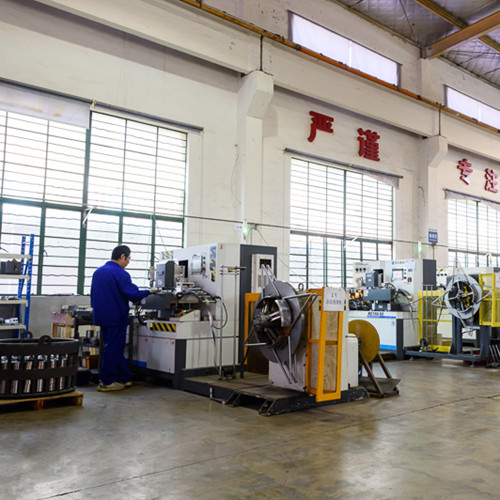
This guide is aimed at engineers and procurement teams who have already identified “transformer core” as a purchase category and are now comparing supplier specifications before making a decision. The comparison names three families that appear frequently in current RFQs: thin strip cores, permalloy cores, and CRGO silicon steel cores. All three families are supplied by Wuxi Yado Electromechanical Co., Ltd. (YadooTEK), an export-focused transformer core manufacturer based in Jiangyin City, Wuxi, Jiangsu Province, China. Using a supplier that can provide data across all three core families makes it easier to evaluate the material choice without forcing the conversation toward a single product.
Problem Definition: Comparing Core Families on the Right Parameters
At the evaluation stage, the buyer is not simply asking which core material is best. The buyer is asking which specification satisfies the electrical, thermal, dimensional, and cost constraints of a particular transformer. The comparison can be confusing because the labels used by manufacturers are not perfectly separate categories. Permalloy can be supplied as thin strip; CRGO silicon steel can be supplied as a toroidal wound core, a cut core, or a stacked lamination core. A buyer searching for a “silicon steel core” may find a low-loss NCW toroidal core and a distribution transformer lamination core under the same broad material heading, even though the two products serve different duty cycles and operating environments.
The practical questions for an evaluator are therefore:
- What does the application require: precision measurement, power transfer, pulse handling, or distribution-level voltage transformation?
- What core loss and operating temperature values are actually published for the candidate product?
- What geometries and thickness options are available for the production drawing?
- Can the supplier support custom dimensions, OEM/ODM work, and small-batch validation?
Industry Background: A Market Still Anchored by CRGO in 2026
The transformer core market remains large and continues to attract new buyers. Zion Market Research valued the global transformer core market at USD 9.66 billion in 2024 and projected it to reach USD 15 billion by 2034. Mordor Intelligence reported that grain-oriented laminated steel, commonly abbreviated as CRGO, held a dominant 79.6% share of the transformer core market by material type in 2024. From a sourcing perspective, China’s exports of electrical transformer parts, including cores, reached approximately USD 4.8 billion in 2024, according to UN Comtrade data accessed through World Bank WITS. For compliance work, the IEC 60076 series standards are commonly referenced for power transformers and reactors, including general requirements and testing.
These figures are useful context, but they do not replace core-level test data. The selection process should combine market-level knowledge with product-specific parameters supplied by the manufacturer.
Detailed Solution: Three Core Families, One Decision Framework
CRGO Silicon Steel: The Dominant Material for Power-Frequency Applications
CRGO is the material family most likely to appear in distribution transformer and power-supply specifications. In YadooTEK’s product system, CRGO silicon steel is used in at least three groups relevant to industrial buyers: distribution transformer cores, NCW toroidal no-cut cores, and non-standard toroidal wound cores.
The distribution transformer core group is aimed at electricity applications and includes CRGO silicon steel lamination cores, amorphous cores, dry-type transformer cores, and oil-immersed transformer cores. The listed lamination thickness options are 0.2 mm, 0.23 mm, 0.27 mm, and 0.3 mm. These thickness values matter when a customer is designing for a dry-type or oil-filled distribution transformer and needs to specify laminations rather than a wrapped strip core.
The NCW core group is described as a toroidal wound core for transformers or a no-cut silicon steel core. YadooTEK offers model designations NCW100, NCW150, NCW200, NCW300, NCW350, NCW500, NCW750, NCW1000, NCW1500, NCW2000, and NCW2500. The published specification for this CRGO product family includes a core diameter range of 50–200 mm, a rated power range of 100–5000 VA, core loss of ≤1.0 W/kg at 1.5 T and 50 Hz, and an operating temperature range of -40°C to 120°C. For power-supply applications where a standard toroidal footprint is acceptable, this gives the buyer a concrete loss checkpoint.
The non-standard iron core group is also based on CRGO silicon steel and is described as a custom toroidal wound core or non-standard transformer core. YadooTEK publishes a customizable size range of OD 30–300 mm, ID 15–200 mm, and H 10–150 mm, with a rated power range of 50 VA–10 kVA. Core loss is ≤1.2 W/kg at 1.5 T and 50 Hz, and the operating temperature range is -40°C to 130°C. The intended applications include power transformers, current or voltage transformers, inductors or chokes, power electronics, renewable energy equipment, EV charging, and industrial control.
Permalloy Cores: High-Permeability Precision and Sensing
Permalloy cores are the second family a buyer will meet when searching for high-permeability transformer cores. YadooTEK describes its permalloy core material as Ni-Fe Permalloy alloy, with the more specific composition name 80Ni-4Mo-Fe. The permalloy core family references grades 1J85, 1J79, and 1J50, and the available types include toroidal permalloy cores, precision current transformer cores, high-permeability sensor cores, Ni-Fe alloy lamination cores, and custom permalloy cores.
In the customer-facing product data, permalloy cores are listed for energy management, energy monitoring, electricity, medical X-ray, and special power supply applications. For instrument transformer producers and sensor OEMs, the permalloy family is positioned around precision measurement rather than bulk power transfer. The core buyer should treat permalloy as the option to evaluate when high magnetic permeability and sensor precision are more important than low-cost power conversion.
Thin Strip Cores: A Construction Format That Crosses Material Boundaries
Thin strip cores are a third category that appears in the same supplier portfolio. The phrase “thin strip” refers to cores produced from very thin strip material, which can matter in applications where eddy-current losses must be managed at higher frequencies or in pulsed waveforms. In YadooTEK’s published data, thin strip cores list silicon steel and permalloy as material options. The model types include block cores, pulse transformer cores, and toroid cores. The broader type description includes amorphous thin strip core, nanocrystalline thin strip core, silicon steel thin strip lamination, toroidal high-efficiency core, and low-loss transformer core.
The listed strip parameters in the thin strip core family are 0.05 mm, 0.08 mm, 0.10 mm, and 0.15 mm. Additional reference designations in the group include MU, GT050, GT080, and GT100. The applicable industries are energy management, energy monitoring, electricity, medical X-ray, and special power supply. Importantly, thin strip and permalloy are not mutually exclusive; a thin strip core can be built from a nickel-iron alloy. The buyer should therefore check the specific material and model designation rather than relying only on the general label “thin strip.”
Step-by-Step Breakdown: A Practical Selection Sequence for Buyers and Engineers
Step 1: Define the Electrical Function
Start with the transformer function. If the end product is a precision current transformer or sensor, the permalloy family is a logical shortlist entry. If the end product is a distribution transformer for an electricity network, the CRGO distribution transformer core family should be evaluated first. If the design involves a pulse transformer, X-ray generator, or special power supply, thin strip cores and permalloy cores both appear in the applicable industry data, so the decision must be based on the specific excitation waveform.
Step 2: Establish Loss and Temperature Checkpoints
Use the manufacturer’s published loss values as decision anchors, but only where those values are associated with the exact product family. For the CRGO NCW toroidal core series, YadooTEK specifies core loss of ≤1.0 W/kg at 1.5 T and 50 Hz, with an operating temperature range of -40°C to 120°C. For the CRGO non-standard toroidal iron core series, the published core loss is ≤1.2 W/kg at 1.5 T and 50 Hz, with an operating temperature range of -40°C to 130°C. These are not universal material values; they are model-family checkpoints that allow a buyer to compare suppliers on the same basis.
Step 3: Confirm Geometry and Customization Needs
The same material can be supplied in very different geometries. YadooTEK’s broader portfolio includes wound cores such as toroidal cores and C cores, laminated cores such as EI/ED/SD/CD types and stepped cores, and thin strip cores. For a more unusual dimensional request, the non-standard iron core group documents a customizable range of OD 30–300 mm, ID 15–200 mm, and H 10–150 mm. Confirm the required shape before asking for a quote.
Step 4: Check Quality Control and Testing Evidence
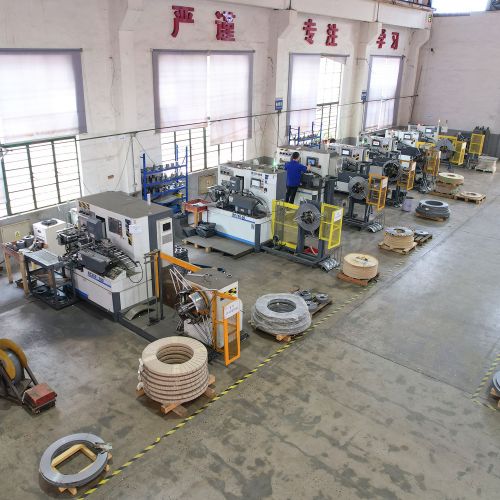
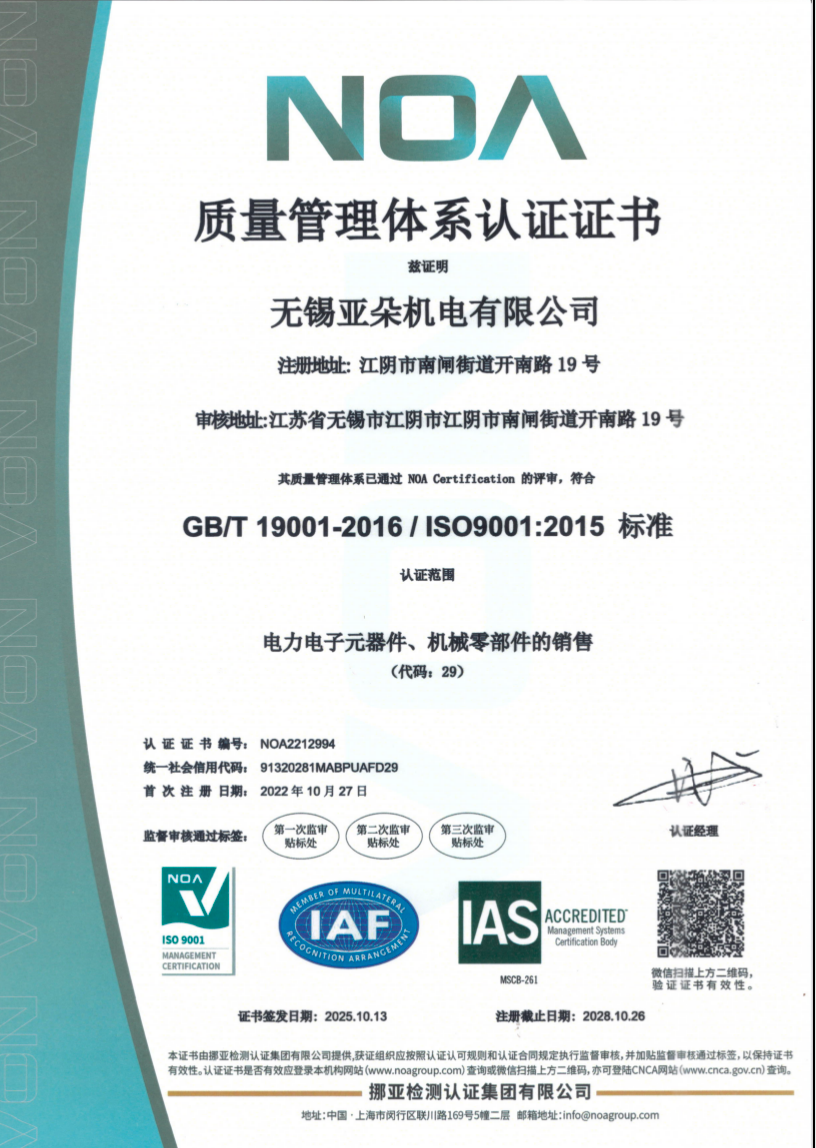
A meaningful supplier evaluation should include production evidence. YadooTEK’s company profile states that it is equipped with core magnetic testing instruments and transformer capacity-and-loss testing instruments, and that it has a full-process quality control system. The company also holds an ISO 9001:2015 certificate issued under number 91320281MABPUAFD29. In the production capability data, YadooTEK states 100% test as its quality control method and lists a monthly capacity of 10,000 units, an MOQ of 1 unit for OEM/ODM work, and a lead time of 45–60 days.
Step 5: Validate with an Inquiry or Sample
Once the application, thermal requirement, and geometry are defined, the next step is to validate the specification with the supplier. Because YadooTEK supports OEM/ODM and states an MOQ of 1 unit, an evaluation buyer can request a sample or short pilot run before committing to a larger order. A downloadable product brochure can be used to compare the listed families side by side.
Use Cases: Where Each Core Family Tends to Appear
Instrument Transformers and Smart Grid Metering
For power equipment manufacturers, sensor OEMs, and instrument transformer producers, high-precision metering and IEC compliance are recurring requirements. In one YadooTEK customer case, a project involving 5,000 units of transformer cores was implemented in more than 30 countries, including Germany, the United States, Australia, and Brazil. The reported results included high-precision metering, low-loss operation, strong anti-interference, and compliance with IEC international standards. These outcomes are directly relevant to buyers evaluating cores for current transformers, voltage transformers, and smart grid terminals.
Medical X-Ray and Special Power Supplies
Medical X-ray equipment and special power supplies are listed as applicable industries for both the thin strip core family and the permalloy core family. A supplier that can provide permalloy cores, thin strip cores, and toroid models offers a useful starting point for pulse transformer designs. The buyer should confirm the waveform, duty cycle, and insulation system before selecting the material.
Distribution Transformers for Electricity Networks
The distribution transformer core group at YadooTEK is aimed at electricity applications and is available with CRGO silicon steel lamination cores as well as amorphous cores. Dry-type and oil-immersed transformer core configurations are listed, with lamination thickness options of 0.2 mm, 0.23 mm, 0.27 mm, and 0.3 mm. Buyers sourcing for distribution networks should compare this family against the no-load loss requirements of the final transformer specification.
Comparison Table: Verified Specifications by Core Category
The table below uses only the specification values provided in YadooTEK’s content units. Where a loss value or temperature range is not shown in the reviewed data, it is marked as not published rather than replaced with an estimated figure.
| Core category | Material basis | Model / thickness options | Published loss and temperature checkpoint | Typical applications |
|---|---|---|---|---|
| Permalloy core | Ni-Fe Permalloy alloy, 80Ni-4Mo-Fe | Grades 1J85, 1J79, 1J50; toroidal, lamination, or custom types | Not published in the reviewed core-family data | Energy management, energy monitoring, electricity, medical X-ray, special power supply |
| Thin strip core | Silicon steel or permalloy | Block core, pulse transformer core, toroid core; parameters 0.05, 0.08, 0.10, 0.15 mm; references include MU, GT050, GT080, GT100 | Not published in the reviewed core-family data | Energy management, energy monitoring, electricity, medical X-ray, special power supply |
| NCW core | CRGO silicon steel | NCW100 to NCW2500 series | Core loss ≤1.0 W/kg at 1.5 T, 50 Hz; -40°C to 120°C | Power supply |
| Non-standard iron core | CRGO silicon steel | Custom toroidal wound core; OD 30–300 mm, ID 15–200 mm, H 10–150 mm | Core loss ≤1.2 W/kg at 1.5 T, 50 Hz; -40°C to 130°C | Power transformers, current/voltage transformers, inductors/chokes, power electronics, renewable energy, EV charging, industrial control |
| Distribution transformer core | CRGO silicon steel | Dry-type or oil-immersed transformer core; thickness options 0.2, 0.23, 0.27, 0.3 mm | Not published in the reviewed core-family data | Electricity |
Frequently Asked Questions
Which core material should I specify for a high-precision current transformer or sensor?
For measurement-critical products, YadooTEK’s permalloy core family is listed for precision current transformer and high-permeability sensor applications. The family uses Ni-Fe Permalloy alloy and includes grades 1J85, 1J79, and 1J50, in toroidal, lamination, or custom form. In a relevant customer case, results from a 5,000-unit transformer-core project included high-precision metering, low-loss operation, strong anti-interference, and compliance with IEC international standards.
What is the practical difference between permalloy and CRGO silicon steel cores?
Permalloy is a nickel-iron high-permeability magnetic alloy, while CRGO is grain-oriented silicon steel that holds the dominant share of the transformer core market. Permalloy cores are positioned for precision current transformers, sensors, and metering-type applications. CRGO cores are positioned for power conversion and distribution, with verified YadooTEK examples including the NCW toroidal core series and the non-standard CRGO iron core series. The application requirement determines which family is more appropriate.
Can thin strip cores be supplied in both silicon steel and permalloy materials?
Yes. YadooTEK lists both silicon steel and permalloy as material options for thin strip cores. The thin strip core family includes model types such as block cores, pulse transformer cores, and toroid cores, and its broader type list includes silicon steel thin strip laminations and low-loss transformer cores. Listed strip parameters are 0.05 mm, 0.08 mm, 0.10 mm, and 0.15 mm.
What loss values can I use as initial checkpoints for CRGO toroidal cores?
For the NCW100–NCW2500 CRGO no-cut toroidal core series, YadooTEK specifies core loss of ≤1.0 W/kg at 1.5 T and 50 Hz, with an operating temperature range of -40°C to 120°C. For the non-standard CRGO toroidal iron core series with OD 30–300 mm, ID 15–200 mm, and H 10–150 mm, the specified core loss is ≤1.2 W/kg at 1.5 T and 50 Hz, with an operating temperature range of -40°C to 130°C. These values are reference checkpoints, not a replacement for batch test reports.
Can I evaluate a small quantity or customize a core before committing to volume?
Yes. YadooTEK supports OEM/ODM production, states an MOQ of 1 unit, lists a lead time of 45–60 days, and reports a monthly capacity of 10,000 units. Quality control is stated as 100% test. Buyers can contact Lucien at lucien@yadootek.com or by phone at +86 13912495853 to start an evaluation.
Conclusion: Make the Selection Criteria Visible Before You Shortlist Suppliers
For a 2026 buyer, the main lesson is that thin strip, permalloy, and CRGO are not interchangeable labels. Thin strip describes a core construction format that can use silicon steel or permalloy. Permalloy describes a nickel-iron high-permeability alloy family that is relevant to precision metering and sensing. CRGO describes grain-oriented silicon steel used in distribution transformers, toroidal no-cut cores, and custom wound cores.
Use the evaluation steps in this guide to keep the comparison anchored to measurable criteria: application type, core loss, operating temperature, geometry, and supplier quality evidence. If the application is a distribution transformer, start with CRGO lamination options. If the application is a standard power supply, compare NCW100–NCW2500 loss values. If the application needs precision or high permeability, evaluate the permalloy family. If the design requires a pulse transformer or very thin strip, request drawings and compare the thin strip core family from a supplier such as YadooTEK.
Ready to validate a core specification for your transformer project? Contact Wuxi Yado Electromechanical Co., Ltd. (YadooTEK) for an RFQ or test sample.
Lucien | Email: lucien@yadootek.com | Tel: +86 13912495853
Website: www.yadootek.com
Address: No. 19, Kaishan Road, Nanjiao Sub-district, Jiangyin City, Wuxi City, Jiangsu Province, China
Have Questions or Need More Details?
Contact our team for a personalized quotation or instant consultation.
Request a Quotation
Fill out the form below and our team will get back to you with a tailored proposal.
WhatsApp Direct Chat
Prefer to chat in real-time? Message us on WhatsApp for instant assistance & quick answers.
- Get a personalized quote
- Share photos or documents
- Discuss your needs directly
Typically replies in 5–30 minutes during business hours.