
Transformer Core Partnership FAQ: Terms, Acceptance & Support
Transformer Core Partnership FAQ: Terms, Acceptance & Support
A transformer core supply agreement is decided by three things a price list never shows: the purchasing terms both sides commit to, the acceptance criteria that decide whether a lot is released or rejected, and the support that exists after delivery. This FAQ answers those questions for YadooTEK transformer cores — NCW CORE, Thin Strip Core, distribution transformer core, Permalloy core, Non-Standard Iron Core and BOBBIN — using the specifications the company publishes, and it flags clearly where a project requirement has to be quoted rather than assumed.
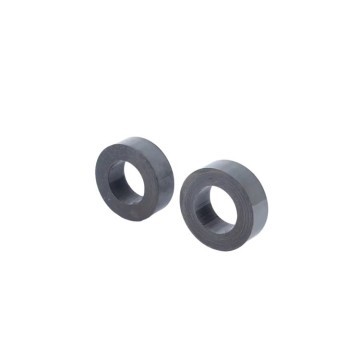
Problem definition: why core contracts fail on details, not price
A transformer core purchase order usually breaks in one of three places, and none of them is the unit price.
The first is an acceptance clause that names a parameter without its test condition. A core loss written as 1.0 W/kg is not a specification until flux density, frequency and specimen are fixed; published figures for this range are stated at 1.5 T and 50 Hz. A supplier quoting a different condition is not necessarily offering a worse core — the numbers simply cannot be compared.
The second is a mismatch between what a catalog states and what the transformer actually needs. Published data describes a family, not the exact part on the drawing. When the requirement is tighter than the published value, the correct process is a quoted project-specific specification confirmed on a sample, not an assumption that the catalog value already covers it.
The third is undefined after-sales. Remote support only resolves a dispute when the fault report carries the lot reference, the measured value against the agreed limit, and the test condition used to obtain it.
A partnership-level agreement closes all three gaps before the first repeat order, not after it.
Industry background: what the 2026 context means for a supply agreement
The material base of the category is concentrated. Grain-oriented silicon steel (CRGO) held a 79.6 percent share of the transformer core market in 2024, according to Mordor Intelligence. Custom Market Insights valued the global transformer core market at USD 9.66 billion in 2024; a second research house reports a close but different figure for a later year, so absolute market size should be read as directional rather than as a planning number.
Geometry still separates performance bands. Toroidal cores are reported at 90 to 98 percent efficiency, while traditional EI laminated cores typically operate below 90 percent (Mordor Intelligence). That gap is exactly why an acceptance clause has to name the geometry, not only the material.
For cross-border repeat supply, wound cores of iron or steel for incorporation into transformers are classified under HS code 8504.90.96.42 (USITC / Credlix). Keeping one classification consistent across commercial invoices and customs declarations avoids a paperwork problem that has nothing to do with core quality.
On standards, transformer-core manufacturers commonly cite IEC 60076 and ANSI C57 as applicable; one manufacturer product page lists both alongside CRGO as the core raw material. That is a design-intent reference, not proof of conformity, and it should be verified at clause level for the transformer class being built.
Detailed solution: the YadooTEK range a partnership agreement has to cover
YadooTEK is the brand of Wuxi Yado Electromechanical Co., Ltd., a transformer core manufacturer and exporter established in 2022 and based in Jiangyin, Wuxi, Jiangsu, China. The company reports a team of 80 people including 25 engineers, an annual output of 250,000 units and an export ratio of 85 percent, serving customers in North America, Europe, Central and South America, the Middle East and Asia.
A partnership agreement only works if it names the families actually being ordered. The published range behind the questions below includes the following groups.
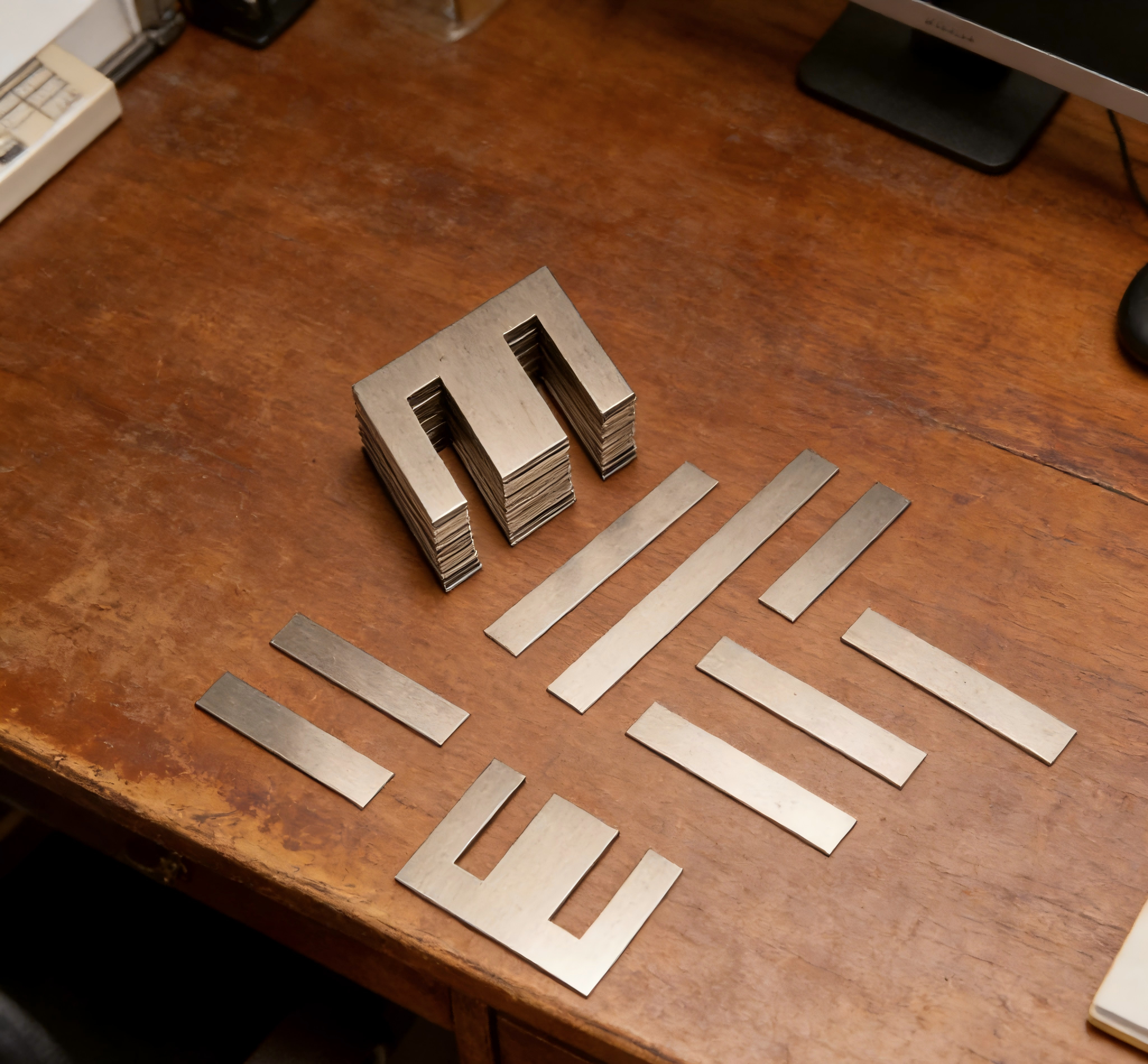
NCW CORE
NCW CORE is the wound core series in the range, with model designations running from NCW100 through NCW150, NCW200, NCW300, NCW350, NCW500, NCW750, NCW1000, NCW1500, NCW2000 and NCW2500. The model numbers define the family; per-model electrical data is not published in the material available for this page, so any loss, dimension or temperature figure for a specific NCW model has to come from the quotation and the sample record.
Thin Strip Core
Thin Strip Core covers Block Core, Pulse Transformer Core and Toroid Core constructions, built as amorphous thin strip core, nanocrystalline thin strip core, silicon steel thin strip lamination, toroidal high efficiency core and low loss transformer core. Published strip thicknesses are 0.05, 0.08, 0.1 and 0.15 mm, with MU, GT050, GT080 and GT100 designations, in silicon steel and permalloy. Applications listed for this family include energy management, energy monitoring, electricity, medical X-ray and special power supply.
Non-Standard Iron Core
Non-Standard Iron Core is the custom toroidal wound core family, made from CRGO silicon steel. Published parameters are a customizable size range of OD 30–300 mm, ID 15–200 mm and H 10–150 mm, a rated power range of 50 VA to 10 kVA, a core loss of no more than 1.2 W/kg at 1.5 T, 50 Hz, and an operating temperature of minus 40 to 130 degrees Celsius. This is the family most custom drawings land in.
Distribution transformer core, Permalloy core and BOBBIN
The distribution transformer core family is designated for dry-type and oil-immersed transformers. Permalloy core is listed as a separate product in the range, with permalloy also appearing as a core material inside the thin strip family. BOBBIN is listed alongside the cores as the matched coil former, which makes the dimensional interface an acceptance item in its own right when core and bobbin ship together.
Additional families that appear in the same agreement
- Low Current Transformer & Low Current Sensor Cores: nanocrystalline core, toroidal core, gap core and CD core constructions, at 0.66 kV and 0.72 kV, with accuracy classes 0.2, 0.5, 1, 0.5S and 0.2S.
- EI lamination Core: CRGO silicon steel at 0.2–0.3 mm thickness, with a stated core loss of no more than 1.2 W/kg at 1.5 T.
- FeSi Unicore: a unicore construction listed for transformer and inductor applications.
- Silicon Steel Rectangular Core, CD Core and CD Cut Core: listed among the custom transformer core types offered.
Every core in that list performs the same physical job in the transformer: magnetic induction, loss reduction, coil support and reduction of excitation current. What changes between families is which parameter governs acceptance.
Purchasing terms: what published capability data actually commits to
The commercial frame of a YadooTEK supply agreement is published as follows:
- Minimum order quantity: 1 unit.
- Customization: OEM/ODM, covering size, specification and material.
- Monthly capacity: 10,000 units.
- Lead time: 45 to 60 days for custom programs.
- Quality control: 100 percent test.
- After-sales model: remote support.
- Export markets: North America, Europe, Central and South America, the Middle East and Asia.
Two published figures need reconciling before either is written into a contract. The capability data lists a 45 to 60 day lead time for custom work, while the application data for this core supply describes a 30 working day operation mode. Both are company-published and they are not interchangeable. The practical resolution is to fix the applicable lead time in the quotation for the specific part and volume, then carry that exact number into the agreement together with a stated measurement start point — drawing approval or purchase order receipt.
Terms that are not published — Incoterm, payment schedule, packaging specification, warranty period and the basis of a replacement claim — are deliberately not stated here. They belong in the agreement and should be negotiated explicitly instead of being inferred from a catalog.
Acceptance criteria: how to write a clause that can be enforced
An acceptance criterion is enforceable when both parties can measure it and reach the same result. Four fields make that happen: parameter, value, test condition and method.
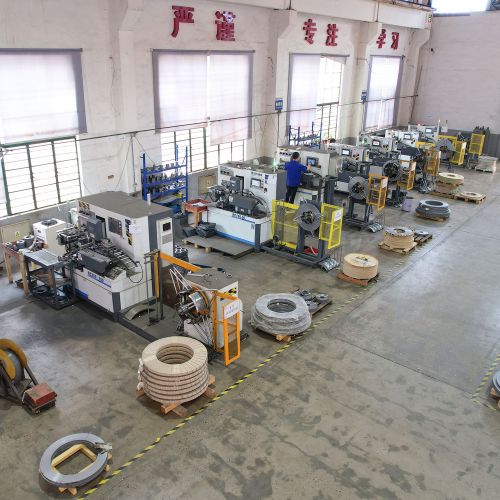
For core loss, the value is meaningless without flux density and frequency. Published values in this range are given at 1.5 T, 50 Hz. The non-standard wound core family states no more than 1.2 W/kg at 1.5 T, 50 Hz; the EI lamination core entry states CRGO at 0.2–0.3 mm with core loss of no more than 1.2 W/kg at 1.5 T. Quoting a loss target without those conditions invites a dispute neither side can win.
For dimensions, the non-standard wound core range is published as OD 30–300 mm, ID 15–200 mm and H 10–150 mm. Tolerances are a separate agreement item and should be written as numbers, not as a reference to a drawing nobody signed.
For temperature, the published operating range for the non-standard wound core is minus 40 to 130 degrees Celsius. Application data for the range describes indoor and outdoor installation, 50 or 60 Hz power systems, high and low voltage, and dry-type or oil-immersed service, so the ambient and the service condition should be stated separately.
For material, name the grade rather than the category. Silicon steel covers CRGO, non-oriented steel and thin strip lamination, and the range also includes permalloy and nanocrystalline cores. A clause that says silicon steel leaves the most important variable open.
| Clause field | What belongs in the agreement | Published reference point |
|---|---|---|
| Parameter | Core loss, OD/ID/H, material grade, operating temperature | Non-standard wound core: 50 VA to 10 kVA, OD 30–300 mm, ID 15–200 mm, H 10–150 mm |
| Test condition | Flux density and frequency for loss; ambient range for temperature | Published loss values are stated at 1.5 T, 50 Hz |
| Inspection level | 100 percent test, 100 percent inspection before delivery | Capability data and case record |
| Reference sample | Approved sample retained by both parties, measured at the agreed condition | Single-unit trial possible at MOQ 1 unit |
After-sales support: what remote support covers and what it needs
Published after-sales support for this range is remote support. That model works when the technical report contains four things: the lot or order reference, the measured value against the agreed acceptance limit, the test condition used to obtain the reading, and the application context — transformer type, rating and duty.
Where the measured value sits inside the agreed limit and the part still underperforms in the transformer, the discussion moves from the part to the design envelope: the loss target, the geometry, or the ambient assumption behind the specification. This is the practical reason the acceptance clause and the application description should live in the same document rather than in separate files held by different departments.
Replacement, credit and freight responsibility for a rejected lot are not published terms. They have to be defined in the agreement: what counts as a non-conformance, who carries return freight, and what lead time applies to a replacement batch.
Mapping a 100–5000 VA project envelope to published data
This is the step that most often separates a workable agreement from an optimistic one. Take a project envelope of 100 to 5000 VA, an ambient requirement down to minus 40 degrees Celsius and a target of no more than 1.0 W/kg at 1.5 T, 50 Hz. Compare each element with what is published for the Non-Standard Iron Core family:
- Rated power. The published custom range is 50 VA to 10 kVA. A 100 to 5000 VA envelope sits inside it.
- Operating temperature. The published range is minus 40 to 130 degrees Celsius. A requirement down to minus 40 degrees Celsius with an upper ambient of 120 degrees Celsius sits inside it.
- Core loss. The published value for the same family is no more than 1.2 W/kg at 1.5 T, 50 Hz. A 1.0 W/kg target is tighter than that published standard value.
The first two elements are catalog matches. The third is not. A loss target below the published family value is a project-specific requirement: it has to be quoted against a specific geometry, material grade and annual volume, and confirmed by a sample measurement taken at the same 1.5 T, 50 Hz condition. Writing 1.0 W/kg into an agreement while the supplier published basis is 1.2 W/kg can still work — but only if that gap has been engineered and priced, not assumed away.
Step-by-step: from first enquiry to a repeatable supply agreement
- Fix the application envelope. Apparent power, transformer type (dry-type or oil-immersed), ambient range, duty cycle, and the loss target with its flux density and frequency.
- Map the envelope to a published family. Thin Strip Core, Non-Standard Iron Core, distribution transformer core, EI lamination core, Permalloy core, CD or gap core for sensor work, or a core supplied with a BOBBIN.
- Split the specification into catalog matches and project-specific requirements. Everything tighter than published data goes into the quotation, not into an assumption.
- Write the acceptance clause. Parameter, value, condition, method, inspection level, and the reference sample rule — all four fields, every time.
- Request the quotation against the commercial frame. MOQ, lead time and its start point, capacity reservation for the annual volume, packaging and Incoterm.
- Approve a sample and record it. A single-unit order is possible at MOQ 1 unit; measure core loss at 1.5 T, 50 Hz and keep the result as the reference for the series.
- Lock the repeat terms. Lead time, re-order point against the 10,000 unit monthly capacity, the non-conformance process, and the lot documentation that must accompany every shipment.
Where these cores are used, and how the questions change
Published application data for the range lists power transformers, current and voltage transformers, inductors, reactors, filters, switchgear, distribution cabinets and power inverters as matched equipment, with customized design, low loss and high efficiency, high insulation strength, RoHS and CE compliance, long service life and anti-corrosion listed as special requirements. Four application patterns show how partnership questions shift between them.

Distribution transformers
The distribution transformer core family is designated for dry-type and oil-immersed transformers. Here the acceptance conversation centres on dimensions, stacking and loss at the operating flux density, and the agreement should state which of the two transformer types is covered.
Instrument and sensor cores
The Low Current Transformer & Low Current Sensor Cores family covers nanocrystalline, toroidal, gap and CD cores at 0.66 kV and 0.72 kV, with accuracy classes 0.2, 0.5, 1, 0.5S and 0.2S. Accuracy class, not core loss alone, becomes the acceptance anchor, and the class has to be written into the clause.
Thin strip and pulse applications
Thin strip cores are supplied in 0.05, 0.08, 0.1 and 0.15 mm with MU, GT050, GT080 and GT100 designations, in silicon steel and permalloy, for energy management, energy monitoring, electricity, medical X-ray and special power supply. The agreement has to fix strip thickness and designation, because those two fields decide the magnetic behaviour far more than the outer dimensions do.
Core and bobbin assemblies
Where a core ships with a BOBBIN, the dimensional interface between the two becomes a separate acceptance item. A core that meets its own drawing but does not fit the former is still a non-conformance.
A published case record covers 5,000 units supplied to power equipment manufacturers, sensor OEMs and instrument transformer producers for current and voltage transformers, industrial sensors, power metering equipment and smart grid terminals. The company reports high-precision metering, low-loss operation, strong anti-interference and IEC-standard-compliant results, supported by ultra-low core loss, high magnetic permeability, customized size, high-precision machining and 100 percent inspection before delivery.
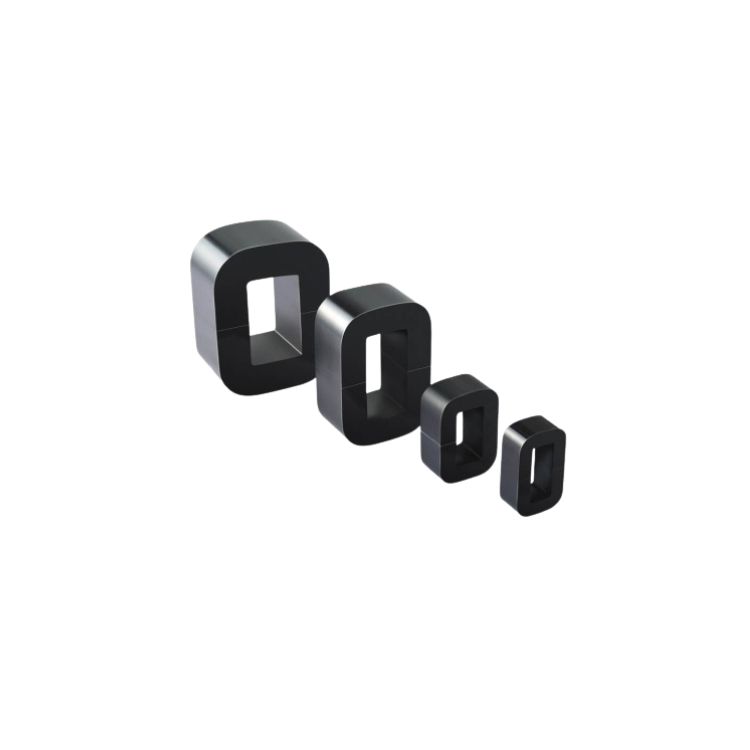
Comparison table: core families and what to specify
The table below uses only published range data. Where a field is not published, it is shown as not published rather than filled with an estimate.
| Family | Construction | Published data | What the buyer must specify |
|---|---|---|---|
| NCW CORE | Wound core series, models NCW100 to NCW2500 | Model designations; per-model electrical data not published | Rated power, OD/ID/H, loss target with test condition |
| Thin Strip Core | Block core, pulse transformer core, toroid core; amorphous, nanocrystalline and silicon steel thin strip lamination | Silicon steel and permalloy; 0.05, 0.08, 0.1, 0.15 mm; MU, GT050, GT080, GT100 | Strip thickness, designation, application such as medical X-ray or special power supply |
| Non-Standard Iron Core | Custom toroidal wound core | CRGO silicon steel; OD 30–300 mm, ID 15–200 mm, H 10–150 mm; 50 VA to 10 kVA; no more than 1.2 W/kg at 1.5 T, 50 Hz; minus 40 to 130 degrees Celsius | Exact OD/ID/H, rated power, loss target, ambient range |
| Distribution transformer core | Core for distribution transformers | Designated for dry transformer and oil transformer | Transformer type and rating |
| Permalloy core | Permalloy core, listed separately in the range | Permalloy appears as a core material in the range | Grade, dimensions, permeability target |
| Low Current Transformer & Low Current Sensor Cores | Nanocrystalline core, toroidal core, gap core, CD core | Silicon steel and nanocrystalline; 0.66 kV, 0.72 kV; accuracy classes 0.2, 0.5, 1, 0.5S, 0.2S | Accuracy class, voltage rating, burden |
| EI lamination Core | Laminated | CRGO silicon steel; 0.2–0.3 mm; no more than 1.2 W/kg at 1.5 T | Stack dimensions, lamination thickness |
| BOBBIN | Matched coil former supplied alongside the cores | Listed in the range alongside the core families | Dimensions and coil compatibility |
FAQ: partnership questions buyers ask before a repeat order
Which standards and certifications should a transformer core agreement reference?
Published company information lists IATF 16949, ISO 9001, ISO 14001 and RoHS. Transformer core manufacturers commonly cite IEC 60076 and ANSI C57 as applicable standards, but such a citation describes design intent and still needs clause-level confirmation for the transformer class being built. Application data for this range also lists RoHS and CE compliance as a special requirement. The agreement should state the standard, its edition and the clause that applies, because a standards name on its own cannot be accepted or rejected at inspection.
Can non-standard sizes and OEM/ODM builds be supplied?
Yes. Customization covers size, specification and material, and OEM/ODM work is part of the published capability. The custom toroidal wound core family accepts OD 30–300 mm, ID 15–200 mm and H 10–150 mm across a 50 VA to 10 kVA rated power range, and the company reports a 25-engineer R&D team supporting product development. Monthly capacity is published at 10,000 units. Any dimension outside that envelope, or a rating above 10 kVA, is a new engineering question rather than a catalog selection.
How should a budget be framed when no public price list exists?
Published material for this range does not contain a price list; cores are quoted per project. What is published is the commercial frame that shapes a budget: a minimum order quantity of 1 unit, a 45 to 60 day lead time for custom programs, and a monthly capacity of 10,000 units. Because a single-unit order is possible, prototype pricing and series pricing can be requested separately, which keeps the sample stage from being priced as if it were mass production. Material grade, geometry tolerance and annual volume remain the variables that move a quotation most.
Can a sample be approved before committing to a repeat order?
The minimum order quantity of 1 unit makes a single-unit trial practical. Quality control is published as 100 percent test, and the case record notes 100 percent inspection before delivery. The sample should be measured at the same condition written into the agreement — 1.5 T, 50 Hz for core loss — and the reading retained by both parties as the reference standard. That record is what makes a later acceptance discussion about data rather than opinion.
What lead time and repeat-order rules belong in the agreement?
Published capability data gives a 45 to 60 day lead time for custom programs, while the application data for this core supply describes a 30 working day operation mode. Because two published figures exist, the applicable one should be fixed at quotation and written into the agreement with its start point. Capacity is published at 10,000 units per month and 85 percent of output is exported, so a re-order point and a freight-season buffer are worth stating explicitly. To move from these published figures to a project-specific answer, send the drawing, the application and the annual volume to lucien@yadootek.com or request a sample and quotation through www.yadootek.com.
Conclusion
The questions that decide a transformer core partnership are not the ones a catalog answers. A minimum order of 1 unit, OEM/ODM customization across size, specification and material, 10,000 units of monthly capacity, a 45 to 60 day lead time for custom programs, 100 percent test and remote after-sales support give a buyer enough to structure an agreement. What keeps that agreement workable in year two is the discipline of writing acceptance as parameter plus condition plus method, and of separating catalog matches from project-specific requirements.
Read the published data in this article as a starting frame, not as a guarantee. Where the envelope is tighter — a loss target below the published family value, a dimension outside OD 30–300 mm, ID 15–200 mm, H 10–150 mm, or a rating above 10 kVA — the correct next step is a quotation and a sample measurement, not an assumption.
Next step: validate before you commit
Send the application envelope, the drawing and the annual volume, and YadooTEK will confirm which family fits, which elements are catalog scope and which need a project-specific quotation. A single-unit sample can be ordered to verify core loss at 1.5 T, 50 Hz before any repeat terms are signed.
Email: lucien@yadootek.com | Tel: +86 13912495853 | WhatsApp: +86 17768348101 | Web: www.yadootek.com
Product catalog and full specification download: YadooTEK Transformer Core Catalog (PDF)
Have Questions or Need More Details?
Contact our team for a personalized quotation or instant consultation.
Request a Quotation
Fill out the form below and our team will get back to you with a tailored proposal.
WhatsApp Direct Chat
Prefer to chat in real-time? Message us on WhatsApp for instant assistance & quick answers.
- Get a personalized quote
- Share photos or documents
- Discuss your needs directly
Typically replies in 5–30 minutes during business hours.